the only way out is through: Image Bearing, education, and the true cost of AI

I am passionate about teaching.

My dad was a teacher for decades, off and on, throughout my childhood and teens.

I have blinked andโ€” somehowโ€” I am now well into two decades of teaching myself.

(I’m still working out how, exactly, that happened.)

I want to be transparent about what this post actually is. It is not a polished position paper. It is not a formal research summary. It is something more like what happens when my brain has been carrying a growing weight of concern for long enough that it just needs to become words on a page.

These thoughts have been living in me for a while nowโ€” surfacing in quiet moments of lesson prep, interactions with students, in conversations with other educators, in the way I watch my own children move through their days. I have turned them over and over, tested them against what I see in my classrooms and what I feel at my own kitchen table.

And I finally decided the best thing to do with all of it is to just write it down.

This concern.

This bit of a sinking feeling when it comes to education and educating.

This shaping of conversations with both my students and my children when they look at the world around them and wonder where they will fit in it.

The world is changing so fast, I’m just not quite sure what to say.

(And friend, that is not something I say lightly. I tend to always have something to say. Ask anyone who knows me.)

Here’s the thing, though: I am not “just” a teacher sitting here writing this.

I am also a parent sitting exactly where you are sittingโ€” looking at my own kids and feeling the same overwhelm of love mingling with uncertainty. (I’m sure you are not a stranger to this particular mixture of emotion…)

My children are walking into this same future. That’s not an abstraction for me.

It’s my daughters. It’s my son.

Which means everything I’m about to say, I feel with my whole selfโ€” not just as an educator, but as a mother who is wondering on how to make the same bets on the same uncertain future that you are.

We are standing at a genuinely strange moment in history. The future our kids are walking toward looks different from anything we were prepared forโ€” and I think most of us feel that, even when we’re not quite sure what to do with the feeling.

The advice we were given? The path that seemed reliable?

Do good in school. Get a degree. Get a good thinking job.

That map seems like it will no longer be accurate.

As the adults in these children’s lives, we owe them something better than outdated directions.

Here’s what I am coming to believe, from years in this work and now watching my own children grow: the skills that will matter most in what’s coming are the same ones that have always made humans most fully human.

Beyond that, they showcase who we are as Image Bearers.

The ability…

To listen so carefully that you hear what the other person couldn’t quite say. Or what is actually being said under and around words. To know what you believe and whyโ€ฆ and communicate it well. To tell a story that moves people and connects them to The Story.

These aren’t extras.

They aren’t enrichment.

They are the foundation.

It’s one of the main reasons I teach what I do.

I teach speech and debate because when a person learns to debate, something happens that goes far beyond learning to argue. They learn that ideas have real weight and real consequences. They learn to examine a claimโ€” really examine itโ€” and ask:

Is this actually true?

Is this something we should believe and do?

What happens if we take this idea and follow it all the way through?

They learn to disagree with someone respectfullyโ€” which means they first have to genuinely understand what that person actually believes and why. (This is harder than it sounds. Trust me. Actually, you probably have an idea of how hard that is.)

In a world increasingly flooded with generated content, recycled talking points, and information that sounds authoritative (whether it is or not)โ€” the capacity to actually process those questions is not just nice to have.

It is survival skill.

I want your children and my children to be the ones in the room who can say waitโ€” and mean it.

Who can slow things down to ask the right questions.

It only comes from practice. It comes from wrestling with words, learning to choose the right ones, and being vulnerable enough to share ideas in front of others, face-to-face. (Not screen-to-screen. But that’s another blog post for another day.)

It comes from having argued and won.

It comes from having argued and lostโ€” and having to sit with why.

It is hard work, this friction with ideas and words and identity.

But it is good work.

It is crucial work.

Moving on from speech and debate is something I am even more passionate about…

Story.

Think about every culture that has ever existed on this earth. What do they all have in common? Not language. Not geography. Not customs or clothes.

Story.

Every single one of them.

Story isn’t just something we tell. It is something that tells us. It shapes the way we understand who we are, where we came from, what we owe each other, and what we are reaching toward. The stories a culture passes down are not just entertainment or historyโ€” they are formation. They are the invisible architecture of a people.

And the stories we tell ourselves? Quietly, in the small hours? Those are forming us too, whether we know it or not.

This is why it matters so deeply what stories our children are givenโ€” and what stories they are learning to tell. Because a child who can shape a story is a child who is learning to share meaning, not just consume it. They are learning that the world is not just a series of things that happen to themโ€” but something they have a voice in. Something they can bear witness to. Something they can have a hand in. Something they can pass on.

Here is the thing I keep coming back to: we were made by a God who is, at His very core, a Storyteller. The whole of Scripture is not a rulebook or a list. It’s not a theology “textbook”โ€” it is a story. With a beginning and a crisis and a turning point and a redemption and a promised ending that is better than anything we can imagine. When we teach our children to tell true storiesโ€” to tell The True Storyโ€” we aren’t just telling them to find the words, to shape plot, to speak with honesty and intentionโ€” we are not just teaching a skill.

We are echoing the One who started our Story when He spoke the first words into the dark.

And called it good.

A child who knows how to tell their own story knows who they are. And a child who knows who they are is far harder to manipulate, mislead, or simply sweep along by whatever current is moving fastest.

There is a practice I use in my home and in my classrooms that is over a hundred years oldโ€” and I am convinced it is one of the most radical things we can do for children right now.

Charlotte Mason called it narration: the simple, demanding act of closing the book and telling back what you just took in, in your own words, from your own mind. No prompts. No multiple choice. No algorithm to autocomplete your thought.

Just you, and what you actually understood, and the work of making it yours.

It sounds simple.

It is not easy.

And that difficulty is precisely the point.

Narration forces a child to own their thinkingโ€” to reach for their own language, to discover what they actually grasped and what slipped past them. In a world where any text can be instantly summarized by a machine, teaching children to summarize from the inside out is not a nostalgic, 1800s-based skill.

Today, it is resistance.

When I sit across from my own children and watch them find words for what they’re thinking and feeling, it takes more time and effort than slipping them a worksheet. But I do it because the ability to articulate your inner lifeโ€” to name what you think and why, to say it out loud and own itโ€” is one of the most protective things for both ideas and identity a person can have.

I believe that with everything in me.

Now, another thing to consider. It isn’t a new idea.

In fact, you are probably very familiar with it.

We humans gravitate toward the path of least resistance.

There has always been a version of this struggle in educationโ€” students who want the grade without the growth, the answer without the wrestling. That has always been the part of teaching.

(Frankly, it’s the part that tears me down the most.)

But something has shifted. The ease available to students now is unprecedented. And I have watched itโ€” I have felt itโ€” as students simply stop reaching and working and start accepting whatever is handed to them, then hand it to me with a look as though I should be satisfied with mediocrity.

(Sidenote: I’m not speaking about every student. I have some hardworking, delightful, amazing students. I am talking about an overarching shift in caliber as a whole.)

Here is what makes it harder: it’s not just that they want it to be easy.

They expect it.

Ease has led to entitlement, and somewhere along the way, the systems meant to support education have started agreeing with those who want. I am handed standards that ask less, and ask me to assign higher grades for less work (and A, B, C, etc. are NOT what they used to be). There is a quiet but unmistakable message that rigor itself is somehow unkind.

I am being asked to lower the bar at the exact moment in history when raising it has never mattered more.

I want to pause here and be clear about something, because I think it matters:

I am not advocating for raising the bar past what is developmentally appropriate. There is already a strange tendency in education to push harder in all the wrong directionsโ€” rushing literacy into four-year-olds who need to be playing, drilling academics into children whose brains are simply not yet built for that kind of abstraction.

That is not rigor.

That is anxiety dressed up as standards.

What I am talking about is something different entirelyโ€” the friction that belongs to each stage. The age-appropriate struggle that actually builds something. And about how we are systematically removing that struggle the moment technology offers an easier path.

It produces a deeply strange result. We expect kindergartners to read fluently and third graders to perform on standardized testsโ€ฆ but somehow, by college, students cannot construct an outline without assistance.

We accelerated the wrong things and smoothed away the right ones.

The friction we are so eager to eliminate is not the enemy of learning.

In most cases, it is the learning.

I am finding myself becoming more rigidโ€” not because I want to be stubbornโ€” but because I know what is being given up when the students do not.

I refuse to believe this is what learning has to become.

The exhaustion I carry isn’t from the work. It’s from loving students enough to grieve what they’re losing while they’re becoming too ignorant and too comfortable to notice it’s gone.

I am not afraid of artificial intelligence as a tool. Used wisely, it’s remarkable. But I am genuinely concerned about what happens to a generation of children who grow up using it before they’ve built the skills to know how to use it well.

Here is the risk I want to name clearly: AI doesn’t just threaten jobs. Used without wisdom, it quietly erodes the very capacities we need in order to think at all. If your child never learns to construct an argument from scratch, they won’t recognize when an AI-generated argument is wrong, or manipulative, or missing something essential. If they never struggle to find their own words, they lose the ability to notice when someone else’s words are shaping them toward a conclusion they didn’t choose and don’t want.

There is a version of the future where AI thinks for an entire generation, and that generation simply accepts it.

Not because they aren’t intelligent.

But because they never built the muscles to do otherwise.

The friction of real thinking feels unnecessary when something smooth and fluent is available on demand.

(And honestly? I think about this when I watch my own children reach for easy answers. It makes me more committed to this work, not less.)

Communication, debate, and storytelling are how we build those muscles. They are what grows discernmentโ€” so they can show discernment.

So they can share discernment.

I believe something that puts me in a somewhat unique position to speak on all of this is the fact that I don’t just homeschool my kids or teach one age group. I have my toes in all of it. I teach elementary children, junior high students, high schoolers, and college students outside my home. I see the arcโ€” all of itโ€” and what disconcerts me more than anything right now is that I am watching the same pattern at every single level.

The expectation of ease doesn’t arrive in college.

It is already fully formed long before then.

It is being shaped early, normalized youngโ€” and by the time students reach higher education, the idea that learning should require genuine struggle feels foreign to them. Or worse: offensive.

I’m concerned this isn’t a phase or a generational quirk.

It is systemic.

It is accelerating.

And it is starting earlier than it ever has before.

Which tells me the place to address it is not college.

It isn’t even high school.

It is nowโ€” before the expectation of effortlessness calcifies into something we can no longer reach through.

So here is my encouragement to you as parents:

Hold the line on appropriate rigor.

Keep expecting real work from your childrenโ€” even when they push back, even when it causes friction, even when letting it go would be so much easier. I know that temptation intimately. I live it in my own home, with my own kids.

It is hard to be the source of the friction. It is hard to watch your child struggle and not rescue them. I know. I know.

But that struggle is not a sign that something is wrong.

It is the sound of a mind being built.

It starts with learning to speak in front of people when it’s terrifying. It starts with defending a position and discovering what you actually believe. It starts with writing a story and finding out you have something worth saying.

The people who will shape what comes next are not the ones who use AI the most. They are the ones who think rigorously enough, know themselves clearly enough, and communicate compellingly enough to direct itโ€” and know when to push back against it.

The only way to get those skills is to be uncomfortable enough to acquire them.

I will be honest with youโ€” I wonder, often, if I’m preparing my own kids well enough for a world I can’t fully predict.

Teaching these skills (and trusting my God!) is my answer to that fear. It’s the most honest and hopeful thing I know how to do.

The goal has never been to produce children who can compete with machines. It has always been to form people who are fully humanโ€” curious, discerning, grounded, and capable of genuine connection. People who bring something to the room that no algorithm can replicate.

Because they are what AI can never be.

Image Bearers.

We were made in the image of a God who spoke the world into being. Who told stories. Who revealed Himself through burning bushes and parables and the arc of an entire human history. Who reasons with us, invites us to come and argue, asks us to give account for what we believe and why.

To communicate, to tell truth in creative ways, to wrestle honestly with ideasโ€” these are not merely academic skills.

They are acts of image bearing.

When a child stands up and finds words for what they believe, they are doing something that reflects the nature of the One who made them. When they learn to listen and reason and persuade with integrity rather than manipulation, they are practicing what it looks like to bear that Image with dignity.

This is why I cannot be indifferent to a generation that outsources its thinking and abandons its voice. It is not just an educational loss.

It is a human loss.

We are cultivating something sacred when we teach children to speak well, argue honestly, and tell stories that are Trueโ€” and we diminish that sacredness when we let them believe that a machine can do it for them.

The goal was never just to produce good students.

It was always to form whole people, fully alive to who they are, Whose they are, and why it all matters.

That hard work has never mattered more to me than it does right now.

And it is the greatest privilege of my life to do it alongside you with this generation we are raising.

As an educator.

And as a mom.

breaking the silence.

As the Old English proverbs goes, “We never know the worth of water till the well is dry.” Layman’s terms? You don’t know what you have until it is gone.

Possessions?

We all have lost them.

Opportunities?

People?

We’ve all lost those, too.

I don’t think people think of the losing of themselves.

But here I am, over a year after my mom’s passing, months after my dad’s strokes, realizing that somewhere in the avalanche of grief and survival mode, I lost something pretty precious (to anyone, but maybe more to someone who has degrees and a livelihood in what I do…)

I lost my words.

Not all of them, of course. I still had the necessary onesโ€”the “good morning” to my children, the lesson plans for my students, the “how was your day?” that keeps a household running. But the other words? The witty ones that used to flow from my fingertips onto pages… the more introspective ones that helped me make sense of the world? Those went silent.

It’s strange how grief doesn’t just take what’s obvious.

It reaches into the corners of who you are and quietly pockets pieces you didn’t even know were connected to what– to who– you lost.

I haven’t written here in longer than I care to admit. (A fast scroll to the date of the previous post tells you that.) It would be nice to say that I tried to open a post to write, and the blank page would just stare back at me, and the cursor would blink– ever patient and persistent– and I would just sit here and try to squeeze words out like water from a stone.

But that’s not what would happen.

I didn’t even open to write a post.

Not until this morning.

I didn’t even try.

I did try in my personal journal. But the topics bounced around the obvious. I could casually write about my day, or what the kids did. This, that, and the other.

The irony wasn’t lost on me. Everyone kept saying I should journal through my feelings, that writing would help me process the grief, especially my friends who have walked similar paths. I went to a program called GriefShare, which also praised the virtues of writing as a healing exercise. Articles online and social media all say the same thing: “Write it out. Put pen to paper. Let the words heal you.”

Me?

Proverbial Crickets.

It’s a good thing God doesn’t need my words, because He wasn’t immune to the silence, either. To be honest, I’ve always struggled with prayer a bit. I want to be a woman of prayer. More than that, I guess I want to be a woman that accepts the answers to prayer with faith, not faltering. It is a hard thing to pray hard for things– miracles and mundane alike– and just get No’s. Or Waits with an undetermined timeline. Especially when other prayers from other people seem to get the replies you pray and wish for. He’s all of our Good Father; and it is His prerogative to do as He wills. I just wish I had (have) a stronger faith to immediately take the His No’s, no questions asked, and still feel just as loved and cherished as the children that He says yes to. It’s was a Struggle. It still is.

So I borrowed words. I let David carry my complaints in his psalms. I found myself in Job’s questions. Habakkuk’s wrestling became my ownโ€”asking for answers from heaven while simultaneously declaring trust, even when you look around see emptiness where fulness used to be.

On Sunday mornings, I borrow the words straight from the worship music. I lift my voice, often wobbly. I lift my face, often wet with tears as I sing. Meanwhile, my brain is busy– stacking circumstances like pieces of evidence, crafting careful arguments against every word my mouth shapes:

“All my life you have been faithful…”

Mom’s empty chair.

“All my life you have been so, so good…”

Dad’s strokes.

“With every breath that I am able…”

Bed-bound. Slurred speech.

“I will sing of the goodness of God.”

The way what used-to-be-fun Thursdays now felt like a mountain to climb.

But I sing anyway.

Because faith isn’t by sight.

Because someday it will be.

Because truth isn’t determined by how I feel on any given Thursday.

Because sometimes the most honest thing you can do is let ancient words carry what your own voice cannot, trusting that the God who inspired them understands the difference between your doubt and your disbelief.

So I kept to the main things. I maintained my home as much as possibleโ€”though “maintained” is generous. (Ignore some doom piles and dust bunnies, please.) I poured myself into homeschooling my children, determined that their education wouldn’t suffer because their mom was drowning in sadness. I showed up for my students, crafting lessons and grading papers, channeling what felt like the last reserves of my professional self into being the teacher that I wanted to be, and that they deserved.

Honestly, some days, even these “main things” felt (feels?) like too much.

Some mornings, getting dressed felt like a monumental achievement and the simple act of making breakfast required more emotional energy than I thought I had. But I did them anyway.

I’ve learned keeping going isn’t grand gestures.

It’s stubborn insistence on putting one foot in front of the other.

Grief is like living in a fogโ€”not the romantic, misty kind you see in movies, but the thick, disorienting kind that makes you wonder if you are going to trip at every step.

I’d find myself standing in my kitchen, completely forgetting why I’d walked in there.

I’d start sentences and lose them halfway through.

(I still do.)

But I have noticed some words are trickling back slowly, tentatively. A bit like birds that come back after being scared away. They’re different nowโ€”maybe quieter, maybe more timid. This post itself is proof of that; these sentences that fought their way out despite everything. Maybe, just maybe, they were singing “a tune without the words.” Maybe they “never stopped at all.”

To anyone else who’s lost pieces of themselves in the wreckage of lossโ€”whether it’s your words, your joy, your sense of purpose, or something else entirelyโ€”I want you to know that those pieces aren’t gone forever.

Maybe they are just rearranging themselves, learning how to exist, to come back to a world that’s been fundamentally changed.

Be patient with them.

Be patient with yourself.

Be patient with your faith– the fumbling, the clinging–

Be patient with Frowning Providence, when He hides.

Be patient.

We’ll see the Smiling Face.

Buffalo Bill and the Wild West (free journaling sheets + learning enrichments)

There are two things that I simply have adored throughout this academic year: the concentration and literature suggestions from A Gentle Feast for learning about the 1800s… and my time sharing some of those enchanting stories with our dear co-op, EspritGVL.

I’ve had the delight of teaching Language Arts for both primary (1st-2nd) and lower elementary (3-4th) grades this year, and our sweet primary class is finishing up our time with Buffalo Bill next week– and will be having our own Wild West show(case) to celebrate our learning. (I’ll be doing another post about our activities, Wild West poster replicas, and our party once it is all done.)

The book that we used to learn about Buffalo Bill was the d’Aulaire’s version of the tale. They have a whole series of beautiful books that are lovely to learn from. (Sidenote: as will many books that cover historical characters, you might find some political views that you don’t agree with in there. If that’s the case, take the opportunity of those moments to discuss and learn why we do things differently now.)

To help my little learners in guiding narration and storytelling, copywork, and even a touch of spelling, they got to work through these Buffalo Bill journaling sheets that I created for them. I’d love to share them with you as well! We split the story into two weeks-worth of reading, so had a set of 5 pages per week to work through.

Feel free to download these sheets for your own personal use and share this post with others that might like to use them as well. ๐Ÿ™‚

As a part of this unit, our class loved learning about buffaloes! We found out something pretty amazing about them. Unlike cows, who turn and run away from storms because they are afraid, buffaloes turn west and charge right into the gale to get through it faster! I wrote a little poem for our class about this new buffalo fact and shared it with them. Afterwards, the kiddos drew prairies with buffalo on it and also role-played the poem with some stuffies and a storm cloud. ๐Ÿ™‚

I made the little poem into an animated video , if you’d like to learn more about the remarkable feature buffaloes have of facing storms.

(It must be mentioned that I have no idea how to animate anything, so I just winged this. No judgement, ha!)

Our class time doesn’t leave room for a lot of clip-watching, so I often send extra enrichment links to the parents if their student wants to learn more at home. If you are reading about Buffalo Bill now (or soon), these videos are great ones to add to the facts (and fiction) behind the tall tale.

About Buffalo Bill
Real footage of Buffalo Bill from 1908
Enhanced footage of Buffalo Bill’s Wild West Show
The Legends of Wild West: Buffalo Bill (an animated biography)

About Buffalo
All about American Bison (aka Buffalo)
Buffalo and Native Americans

About Native Americans
(same link above under Buffalo)
Cultural Perspectives of Art and Native Americans

We have now reached the part of our story process that I love the most! Once we finish a book, the students get to spend a week creating something that connects back to what we learned in some way… and then they get to showcase it to the entire class!

The creativity and excitement I see from them is just so encouraging, especially as a communication teacher. Most of my communication students are high school and college-aged, and somewhere along the way, fear and intimidation takes root and many students just hate the thought of getting up and sharing anything in a “formal” way. To give children opportunities to share and present in the smallest, but most pleasantest of ways, does a lot to preventing public speaking from turning into something scary and intimidating.

I’m looking forward to seeing what all my students bring to share with everyone, before we have a fun Wild West party! (I’m making some Western-themed carnival-like games… so wish me luck!)

I hope these few tools and resources add extra enchantment to an already exciting character and story!


Adapting for your kiddosโ€ฆ and free narration pages ๐Ÿ’›

So my firstborn: she loves drawing. While I would read our stories, sheโ€™d draw away, creating portraits of her favorite characters and scenes.

My buddy joined us this year in formal studiesโ€ฆ and he needs his hands busy. Iโ€™m totally fine with him doing his mad matter and blocks to listen, but he wants to โ€œmake a bookโ€ like his older sister (this โ€œbookโ€ is a folder of all her drawings). I will welcome any and all drawings he decides to do, but in the meantime, Iโ€™ve made a way to capture his narrations and allow him to have his โ€œbook,โ€ too.

The moral of the story: what works for one kiddo might not work in the same way for all of them. Their age, stage, and giftings might require some reconfiguring. But isnโ€™t that the absolute beauty of learning alongside your children? ๐Ÿ’›

โ€ฆ
Also, fellow #agentlefeast families, these sheets work with the history readings for cycle 3, term 1, form 1. You have the plans and will know what to do.

https://www.canva.com/design/DAFJ0ZoHxEI/Ims2b4kPMxJxi6IKV1I6wQ/view?utm_content=DAFJ0ZoHxEI&utm_campaign=designshare&utm_medium=link&utm_source=homepage_design_menu

Two Bad Ants: fun activities and the Big 4

Spring and summer is the perfect time to bring out those bug books and studies… considering we can observe them all around us again. (Guess we’ll be doing a mosquito study soon. Sheesh!)

It was on our agenda a couple of weeks ago to study ants… and as I was perusing the library shelves for some fun reads to include, I came across Two Bad Ants. What a delightful little read, and it led to really great learning and play… and curiosity! Win win win!

If you have read other learning posts of mine, you know I’ve been a classroom teacher for years– and that time has shaped how I wanted to teach my own kiddos at home. We are Charlotte Mason/Classical-based (eclectic a bit) in general, but something that I find really shapes learning time well– inside and outside of the classroom– is remembering the Big Four: imagine, encourage, educate, and enjoy. (Note: Charlotte Mason herself was not a huge fan of “lesson plans” as she believed the best education–even only education– was self-education. I don’t disagree. Think of The Big 4 as a framework to hang principles on, not a lesson plan to stick to rigidly or you fail, okay?)

With that said, let’s walk through the Big 4 with this book, shall we?


Imagine

What’s so amazing about fun, living books is that they foster imagination in and of themselves! We don’t have to “try” to make the imagination come alive. Children are born with curiosity and imagination; our biggest challenge is to not get in the way! Two Bad Ants is SO fun in this department. It forsakes familiar words with descriptive language in a way that can made the book a series of riddles for the kids to mentally answer (especially younger ones!), and the perspective of the pictures make the book so fun to “enter” in. As your kiddos are listening to the story, don’t be afraid to pause and let them get curious! My kids asked some really great questions here, like “why do the ants call the grass a forest?” and “how do we know they landed in sugar?” and “why did the ants fly through the black slits in the wall?” What great opportunities to ask them questions back and get them thinking to answer their own questions! You can even take time here to “imagine” being ants or seeing how height and angles change perspective. Crawl on the floor and observe what you see differently, now that you are lower than normal. How about standing on a stool or chair? What do you see now?  

Another way to incorporate imagination is to basically allow them to get creative.

Do they want to make up their own story about the ant?

Put on a play?

Design their own ant playground… which makes me think of Honey I Shrunk the Kids…

Draw an ant? Great! Let them! This book made my 9 year old want to grab our Natural History book and check out all the ants there before deciding to draw her favorite. Awesome!

encourage

When it comes to this principle, I take it different ways at different times. The main way I try to think of incorporating encouragement is seeing what the Bible has to say about what we are learning/observing. What does it tell us about the object we are discussing, or the character we see in the story?

The Bible actually does talk about the ants and what we can learn from them. It tells us to consider the ants and be like them. Why? (Ask your kiddos!) Because they work hard and prepare well. What are some ways we can do that? That question led to a lot of good responses, and their answers included some things that we do as a family and some that we can improve on.

Another way that I like to think about encouragement is making sure that I’m seeing where my kids are growing and improving and making a point to encourage them in that. This isn’t lesson specific, per se. But even as we doing some activities with the book, and the kiddos were asking questions, I make a point to use positive feedback: “What a great question! Let’s see what we can learn about that!” Or “That’s a good observation; you looked really closely to see that!” I want to encourage their effort without making it about me and my “pride” or happiness in it– although I am both proud and happy when they are giving great attention and adding to their own learning!

Educate

Of course, “education” is something that can happen anytime, anywhere. We don’t have to plan or force it to happen. But in the “educate” category in my head is about me figuring what tools I need to give them and what goals I have for them. Basically, it’s asking myself what plates, napkins, silverware, and ingredients are needed for the “feast” that day. And just like every “feast”/buffet doesn’t have every single cuisine represented, I don’t think we need to feel the burden/obligation of making sure every. single.learning.moment has every single type of academic “food.” In other words– if I want to focus on science/nature during that time, I totally can without including fine arts and all the other things. ๐Ÿ™‚

Here’s what I did after reading this book: I got out salt, sugar, and our little magnifying glasses. When my buddy asked how we knew the ants landed in salt, we used the book to answer that question for us– but then we decided to take a closer look at salt and sugar itself. It’s looks pretty similar when we look at it our “normal” way– but what if we take a closer look? At closer inspection, we can definitely see that salt and sugar AREN’T the same. We talked about the differences we could see with a little magnification– which ants would have naturally, being smaller and much closer and with different kinds of eyeballs!

We also did a taste test and observed those differences, too. ๐Ÿ˜‰

Later that night for dinner, when we chatted about what we learned with daddy (hello, extra narration!), the kiddos were so excited to share what they learned– all on their own!

Meanwhile, I had plenty to jot down in my planner that day under “science.”

Enjoy

As I’m sure you can see, there were so many things that were “enjoyable” about what we had done so far that this “box” basically checked itself! Crawling around on the floor, tasting and seeing salt and sugar up close, and reading a fun book all felt and were enjoyable to my kiddos! However, you can always bump this up even more by pulling out any bug games you might have! We actually played a dice game called People Vs. the Ants. We played two variations of this: doubles and odds & evens.

We divided a paper in half and labeled one side People and the other Ants. The idea behind the game was that we are at a picnic and the ants are coming. If we win, we don’t have to move to a new picnic spot; and if the ants win, that means they took over our picnic and could eat all of our food. (Hello there again, Imagination!) Any time we rolled a double, we had to add them together, and that score was added to the ants side. Anytime it wasn’t a double, we added the score together and put it on the people side. Whoever got to 50 first, won! (We won, because we didn’t roll a lot of big doubles.)

We played it again with odds and evens. If the numbers rolled added up to evens, it was put in the People column, and if it added to an odd number, it was an ant score. (This game worked on head addition for my early elementary student, and my kinder boy is learning odds and evens, so he got to work on that, too!)

The kids got an extra dose of “enjoyment” because they love any kind of game… and I got something extra in the “math” section of the day.


Well friends, that’s it! That’s how I took this book and applied the Big 4 to it. If you are wanting to read Two Bad Ants and plug these ideas in, I hope you find your experience with them enchanting and delightful to your family… but more than that, I hope you see how the Big 4 are ideas that can be applied to any book and any day! They definitely help me to create an atmosphere of education in our home. ๐Ÿ™‚


***
If you want to read more about the Big Four, go here, or watch this video that I recently did about it. ๐Ÿ™‚


A little note: the amazon links in this post are affiliate links, which means you don’t pay any extra pennies if your buy through them, but I might. Maybe. ๐Ÿ˜‰

The Big 4: my education (and life) essentials

If you go back over some of my education-themed posts (in the essential learning section), youโ€™ll notice โ€œthe Big 4โ€ pop up here and there. As a recap, my essentialsโ€” a checklist, if you willโ€” that I try to incorporate while we learn together at home are: imagination, encouragement, education, and enjoyment.

In this new video, I chat more about what each of those look like during my day, give an example about how I used a living book to weave the 4 together, and most importantly, the big picture as to *why* I try to place each one purposefully in our day.

If you want some sort of structure to your learning time that leaves room for wonder, try using these 4 in your own home. I trust you will find them a beautiful way to think about and shape your time together. ๐Ÿ’›

the right instructions.

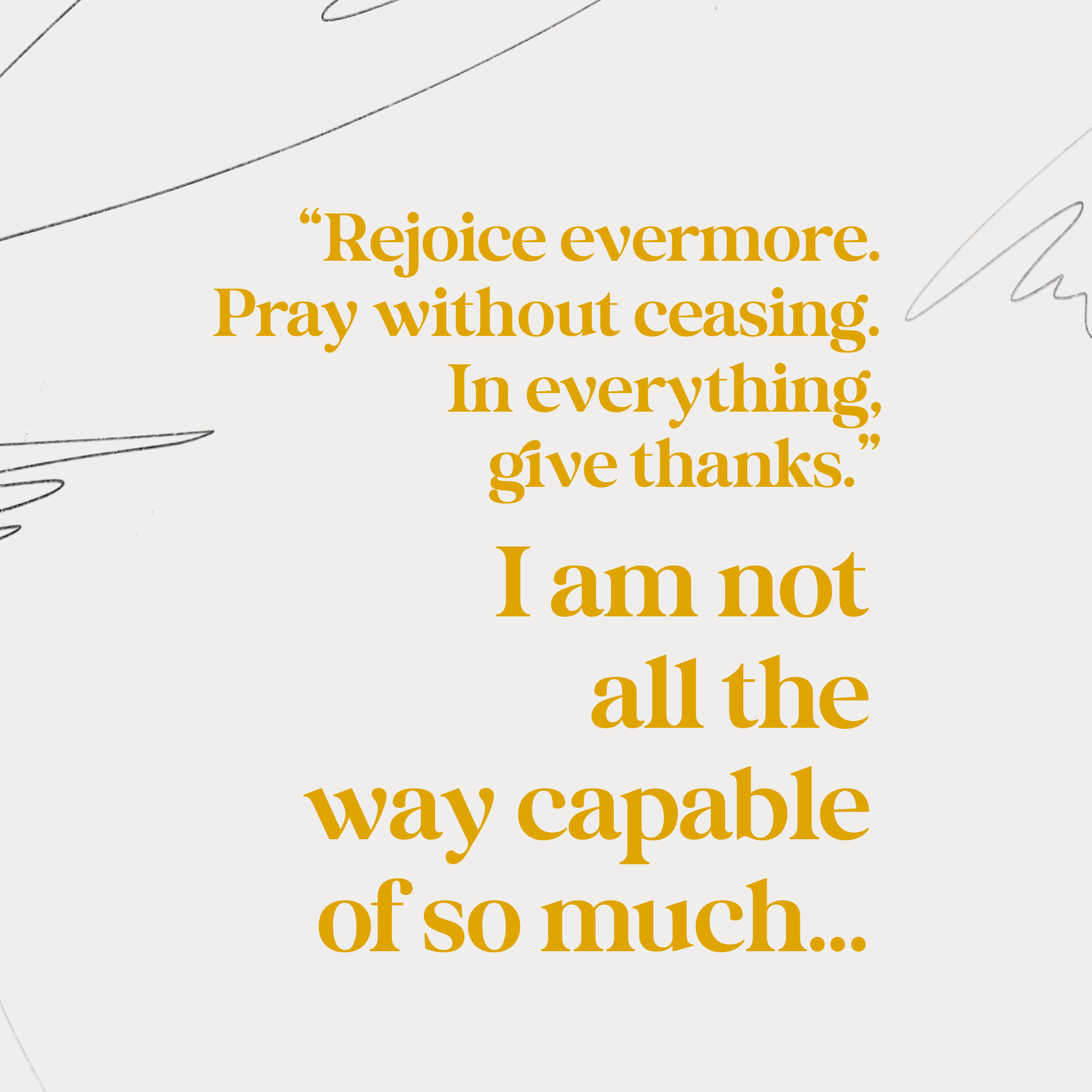
Wendell Berry once said, “You mustn’t wish for another life. You mustn’t want to be somebody else. What you must do is this: ‘Rejoice evermore. Pray without ceasing. In everything give thanks.’ I am not all the way capable of so much. But those are the right instructions.”

I don’t know about you, but there are some days that I just love where Iโ€™m at and what Iโ€™m doing. The moments seem light and joyful, and I feel perfectly placed in my life.

And there are days I donโ€™t.

I can blame it on a lot of things: the news. My lists. The worries on my shoulders. Grief. Extra fighting from the kids. Exchanged sarcasm. The toddler climbing into bed because a storm ignited her fearsโ€ฆ making us all restless. And squished. And sleep deprived.

But the fact of the matter is: the biggest hinderance to my own happiness is my disconnect to the command to give thanks.

You know the verse, โ€œI can do all things through Christ who gives me strength.โ€ We just like to slap those words on anything tricky that we need some extra diligence forโ€ฆ but what, specifically, is it referring to? Paul is referring to being contentโ€” in every circumstance. He says that he has learned to do it, no matter what. How? He can do it โ€œthrough Christ,โ€ who gave him strength *to give this thanks.*

What do you need to give thanks for? What gives your heart pause, just thinking about hoisting it to heaven with gratitude on your lips? I can think of a few things that I feel are just too hard, too sad, too hurtful for me to be thankful forโ€ฆ but fortunately, we donโ€™t have to do it alone. We have a Helper to lift our offering high, and intercede with perfect words we have an impossible time finding.

Christ.

He will give us strength.

Strength enough to offer gratitudeโ€ฆ

and in the doing, we are placed in the perfect position to receive His grace.

And isnโ€™t that something we can be oh so thankful for? ๐Ÿ’›

memories > dreams

โ€œItโ€™s realizing that a great dream is not as good as a great memory. The dream can be had by anyone. The memory โ€“ must be made.โ€ Eric Thomas

I will admit to the past couple of years being one of waving grief. With so much changing, and with the promise of normalcy being pushed back further and further, Iโ€™ve lamented the fact that maybe I wonโ€™t get to make the memories I want with my family the way that I dreamed. The Swiss Alps will be my own experience, and not a shared one. Florence, Italy will be my own words, and something I can share in snapshots and story snippetsโ€ฆ not hand-in-hand. The Black Forest is some place I can tell my kids Iโ€™ve been, and the trees wonโ€™t be something we will see together.

It makes the world a bit sadder, and heaven a bit sweeter.

And itโ€™s trueโ€” that my grief might all be for nothing and the cloud of COVID and all the junk surrounding it will lift, and we will have the most amazing field trip in the world when they are older.

But the point of this post isnโ€™t really a lamentโ€ฆ so let me get back on task.

The point of the post is exactly what the quotation says in the beginningโ€ฆ that memories made are more valuable, precious, deserving because they have existed beyond the walls of our imagination. We have made something real and weaved it in the fabric of our lives and our storyโ€” and the stories of the people that were with us.

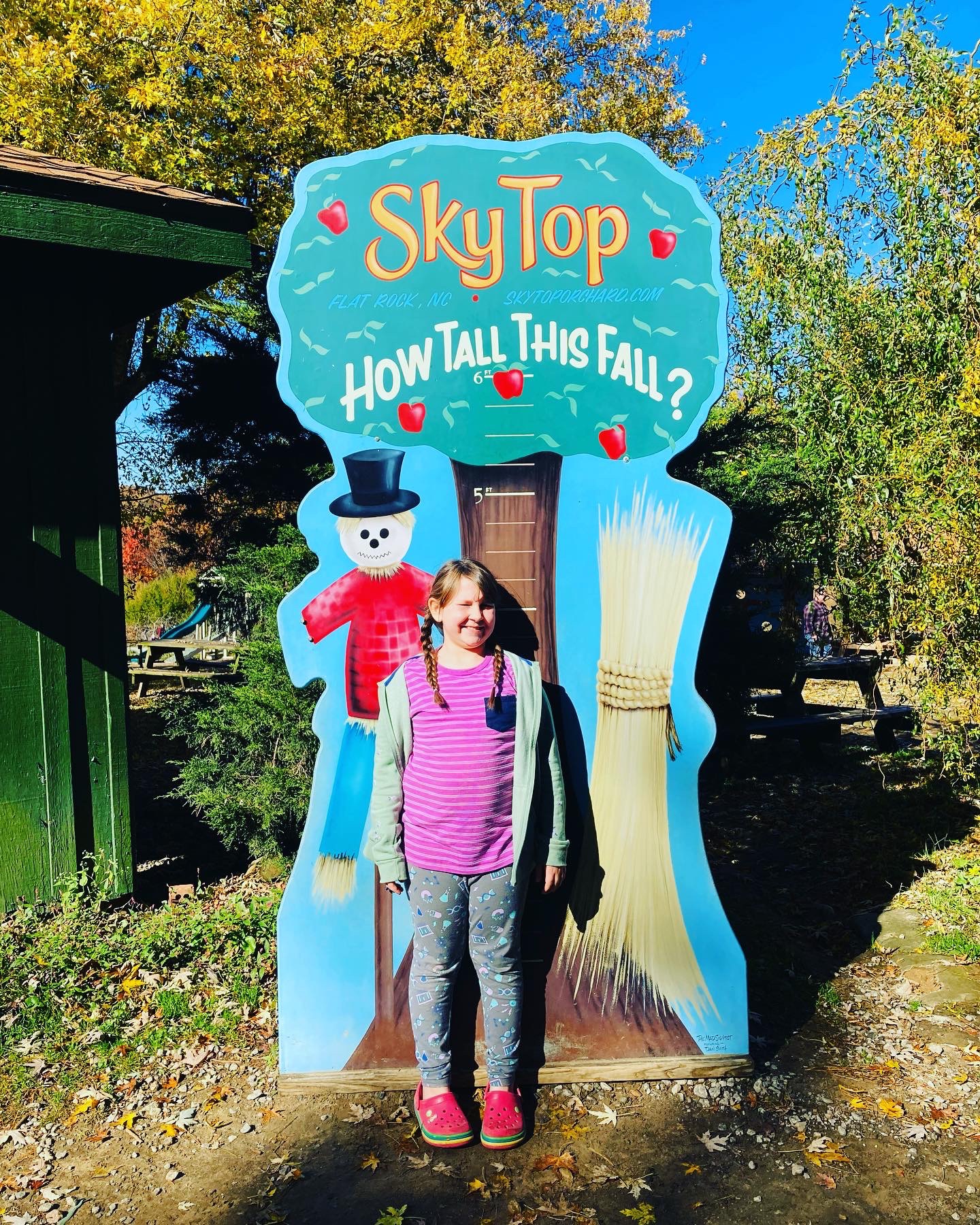
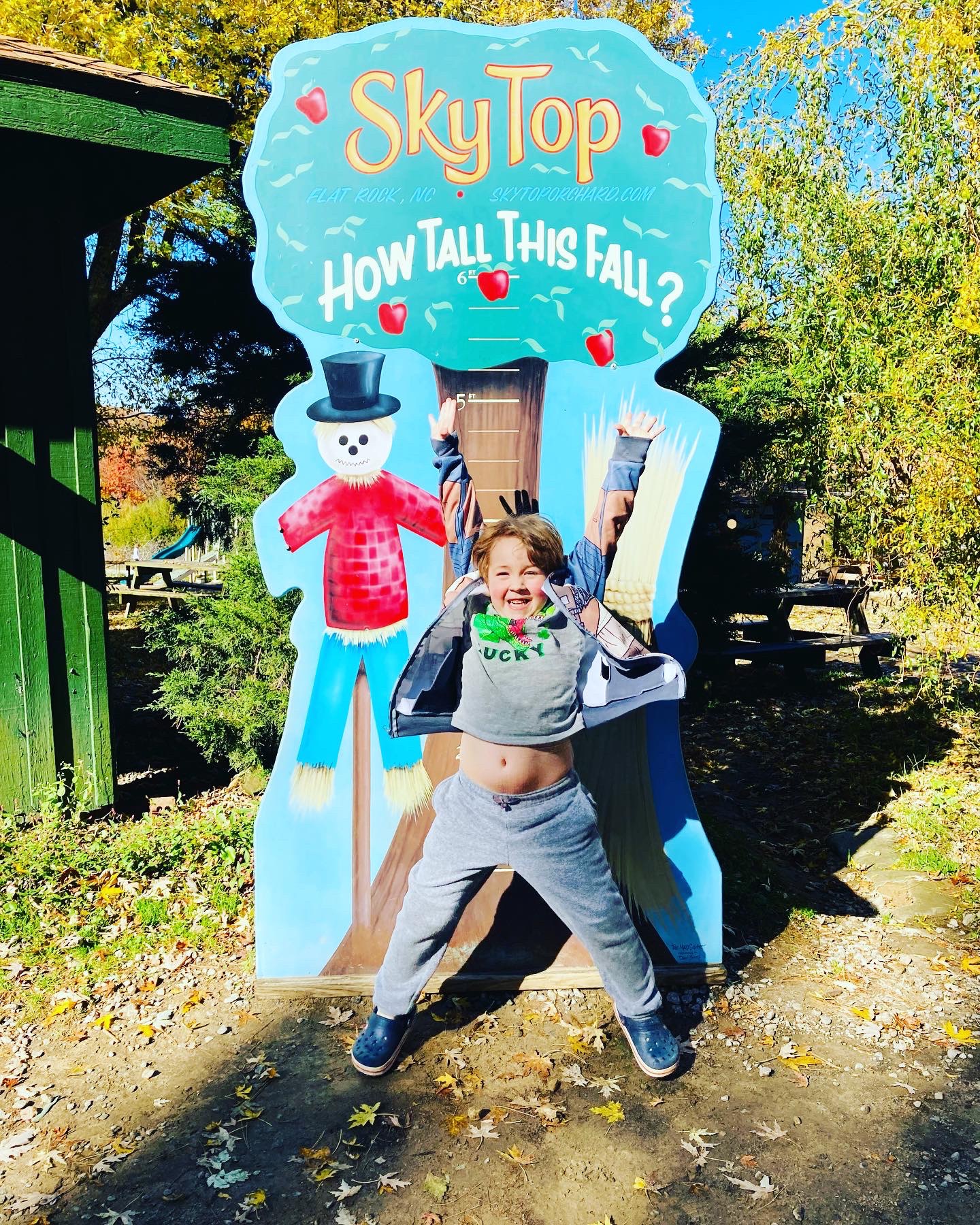
Our little family was late to the mountains this yearโ€” we couldnโ€™t escape earlier for several reasons. We bought apples in bags instead of picking them off trees. But that didnโ€™t damper the beauty of the leaves around us, and the wonder of a random bamboo forest, the sweetness of fall treats, and the laughs over goofy pictures with street bear statues.

(On a side note, how are my children growing so fast?! Iโ€™m afraid to blink and breathe anymore.)

Hereโ€™s to dreams: that they become memories. But hereโ€™s to memories: that we make them in our backyards and slightly beyondโ€ฆ and delight in the simplicity and joy they bring to our moments.

Big Feelings. Bigger Help.

Last week, we chatted a bit about clearing clutter to make room to parent well.

I want to continue that conversation this week.

Let’s start with an “incident” with my oldest.

I won’t go into details, because first, they aren’t that important… and secondly, they are more her details than mine to share anyway.

But let’s just say, E was feeling some big feelings, made a poor choice that shocked ME, which then made me have to take a step back before dealing with the situation. Because without that space for a minute or so, my own big feelings would not have handled the situation well at all.

I think any parent can appreciate what I’m talking about.

In the past, I probably would have just called the problem what it was and go ahead and dish out/allow for the consequence to come on in… but not this time.

This time, I followed some of the talking points that Dr. Becky mentioned in some posts/stories on Instagram. And it played out surprisingly well.

We started off talking about feelings… and how there isn’t such a thing as a “bad” one. Saying this point blank to my daughter made her mouth drop a bit. We talked about how feelings can FEEL bad, and how we can do wrong things with them… but the feeling itself? It is a messenger. It is something our bodies and beings have to let us know that something doesn’t feel right or isn’t right about a situation. Maybe something we believe is important isn’t happening. Or maybe something we feel shouldn’t be happening is. Our bodies let us know. Our feelings come up to tell us something is off. They tell us to pay attention– and it serves us to listen to what they are saying.

More specifically, our feelings conversation focused on anger– because that was the big feeling that provoked the choice that shouldn’t have been made. And whereas anger itself isn’t bad, because even JESUS was angry, we can choose to use that feeling to hurt ourselves and other people– which isn’t right. We talked about how, the next time her big feelings get too much, she should find me and tell me and we can figure out what to do with that big feeling together.

(Pain point: I soveryoften feel my children’s feelings and take them on myself, so that makes big feelings suuuuper hard for me to work through with them. But that’s my own thing to work through and clear out.)

My 8 year old isn’t the only one in the house who has been on the struggle bus recently.

<<cough>>

This 30something has been having her own big feelings recently.

Lots of big stressors makes it easier for my personal triggers to be mashed and throttled. And Lord bless them, my kiddos can mash and throttle those buttons. What normally I feel I have the grace and ease to handle, with big stressors… I don’t anymore.

Right now, we have been hitting car troubles, financial troubles, family issues, etc., + the whole “the pandemic still isn’t letting life get back to normal and it’s been a whole stinking year now and can’t this thing just stop already” thing.

All of the big things hitting at once, merged with the chronic pandemic fatigue, taps on an underlying lie that I fall into the trap of believing all the time: that if I have hope, or have gratitude, or take a breath or rest or really feel happy– somehow, it invites bad things to happen.

Now, I KNOW that’s not true. I KNOW it’s bad theology and my Jesus doesn’t work that way. But it’s a struggle.

All of this conversation and thinking and processing brings me to Thursday. I’m driving E to piano and she brings up an incident where she had a big feeling. And we started talking it through and pulling it apart a bit. As we finished the conversation, she heaved a big sigh and said, “It was a big feeling, and I didn’t like feeling it.”

“But did it show you something?” I asked.

“Yes,” she said. “And what it showed me, I guess that was good.”

And it was behind that steering wheel, as I was getting into a median for a left turn, I heard it. 

That Still Small Voice that whispers in your soul Epiphanies so beautiful that a breath escapes your body.

All my life, I’ve heard it, and if you are a Christian, you’ve heard it, too… so let’s just all recite Romans 8:28 together:

“All things work together for good…”

We know it’s true because God says it true. And we might even know its truth more personally, versus in the abstract. I do. I’ve seen it. Some of the hardest road and trials I have personally faced I can look back at now and see God’s Hand in it– though it looked invisible at the time. 

But that life experience doesn’t change the fact that I still wrestle with my faith sometimes. I’ve never really had a hard time believing that God is Sovereign. But His Goodness? THAT’s what Satan and the fallen world likes to cast shadows of doubt on.

But you see, it is His Goodness that is my Epiphany.

Maybe, just like feelings aren’t necessarily good or bad… our circumstances are, too. We are so quick to label big circumstances that make us feel “bad” as bad themselves and rush to write off the value in them. We silence them and push them away because we don’t want to “feel” their “badness”… and instead, miss why we have them in the first place.

What if circumstances, like feelings, are messengers? And what if, instead of fighting our feelings, or rejecting and regretting what’s happening in our lives, we accept it all for what it is, know it has a purpose… and trust that when we have a hard time (because we will), we can and should reach out for Help.

What’s so wonderful about that Help, is that unlike our feelings and circumstances which come and go, ebb and flow…

Help is Ever Present.

โค

The Big Four

Imagine: This week’s creative outlet isn’t connected to the kids. Note: the Big Four are just as necessary for mommas and caretakers. In fact, the term “mother culture” hits on this, and I’m a big fan. This week, I’ve taken a few minutes here and there to learn and practice a new crochet stitch and am making it into a blanket. I’m almost out of skeins, so will need to grab a few more this week. Read why making blankets is actually an anomaly for me, and why I’m glad I’m actually enjoying it this time.

Encourage: As this post has touched on, the main way I’m encouraging my kids is by working through my own Big Feelings and helping them handle theirs better. If you haven’t checked out Dr. Becky, I totally encourage you to!

Educate: We are starting a unit on fairy tales, and I’m super excited. We read East of the Sun to the West of the Moon this week, and it was the first time *I* had ever read it. E loved it. I read it aloud and do voices and all that (thanks, speech degree!), but here’s a video/reading of the story from the Blue Fairy Book. As with most fairy tales, there’s some things that strike adults as kinda weird, but kids are like, “no big deal.” Life’s funny.

Enjoy: To celebrate a new unit, we got a new game! We haven’t played it yet, but I’m heard great things about this one! Can’t wait to break it out tomorrow!


Making room to parent well

Relish Kitchen Organizing - Lake Zurich, IL, US 60047 | Houzz
(Not my actual kitchen. But it’s pretty, isn’t it? One day… one day…)


The kids were finally asleep and I meandered into the kitchen.

The next day was baking day, and since we do sourdough bread that needs some extra time to do the whole “natural leavening” thing, I decided to make the dough so it could rise while we slept.

However, before getting all the flour out and the starter and bowls down from the cabinet, I do what I always do before I make bread:

Clear the counters. Wipe them down.

It isn’t lost on me that in order to do something well, you have to clean up the clutter first.

I mean, you don’t technically have to, I guess. You could just put the ingredients down and around the dishes that need to be put away and the garbage that didn’t make it to the trash can yet.

But baking that way is stressful– it takes twice as long and adds way more problem-solving. Good luck not having to move 1,000 things to get to the measuring cups with doughy hands. It seems like the more you avoid cleaning, the more mess you actually make.

As I was wiping the counters down, it dawned on me.

Parenting well requires the same kind of effort.

People didn’t tell me that parenthood is basically re-realizing all the triggers you have carried from childhood. Maybe you were braver than me, or smarter than I was, but as I turned into an adult, I just kinda stuffed these memories and triggers away, thinking that since I was “grown-up,” I didn’t have to deal with those pesky thoughts and feelings anymore. I dug a hole and buried them deep, people.

So imagine my surprise when, as a parent of small persons, I find those thoughts and feelings resurfacing, cluttering up my mind and meddling in my own emotions… all while wanting to help guide my own kids through how to handle their own big feelings and hard things.

(It doesn’t help that I have a hard time just letting their feelings be THEIRS instead of turning them into mine as well… #workingonthat.)

I’m guilty of wanting to make them and shape them into what they should be– when I’m finding I have no room to do it well. My own clutter and junk are in the way.

Right now, I’m in the midst of reading about feelings and parenting and re-parenting. I’m hearing things for the first time about how to actually handle feelings– both my kids and my own– instead of stuffing or shaming them away.

I actually had a bit of an epiphany about feelings and circumstances and Sovereignty the other day. But I’m still processing that; hopefully, it will find some words and come in another post soon.

This week, I simply want to lay the groundwork for that bigger thought by encouraging you, whether you are a parent or not, to analyze what mental and emotional clutter is making it harder to accomplish what you need to.

Throw away what what doesn’t serve you anymore. Clean up and put away what you need.

It’s the only way to have room for what is most important now.

โค

The Big Four


imagine: A big part of imagination for us is doing something creative… and this week we started a new handicraft! E has been wanting to work with knives and carve stuff… and I’m just not ready to jump into wood blocks and super sharp objects with littles around. So, we got some fun clay tools and handmade soap and began soap carving! It lays a good foundation to both wood working and sculpture for the future, and is useful now– because we like to wash hands a lot around here! Might as well suds up with a cute elephant, rights?

encourage: I’ve recently discovered Dr. Becky at Home on Instagram. Although I don’t agree with everything she says, her work and words has brought soooo many ah-ha moments for me recently. I’ve walked through some of the things that she has suggested with some “big feelings” over here, and am amazing at how they are starting to reshape the conversations I’m having with myself and with my kids– especially my oldest right now. If you haven’t checked her out, please do! I’ll link her here!

https://www.instagram.com/drbeckyathome/

educate: If you have kiddos who might be interested in soap carving, I’m going to drop some helpful links that might get you going. You can totally do the soap carving with the things that are mentioned in the videos themselves (paperclips, etc.), but my kids just LOVE tools and I know I’m going to use them for clay in the future. A lot of the videos call for Ivory soap because it’s soft, etc., but I opted for a natural handmade soap because we do our best to stay away from synthetic stuff over here. So, here you go! Stuff is hyperlinked below!

The tools we got
Soap Carving video: Teddy Bear, Butterfly, & Turtle
Soap Carving video: Bunnies (this video is my girlie’s goal for spring)


enjoy: Bouncing off of the Bernie meme from last week, I did my own homeschool mom version of the “kombucha” lady meme. I’ll go ahead and drop it here, for those who haven’t seen it.

Brittany Tomlinson, Kombucha Girl Blank Template - Imgflip

Here’s my version from this past week. ๐Ÿ˜‚