the art of argument: why charlotte mason would approve of what we do in debate

I taught debate before I ever heard of Charlotte Mason.

For years, I stood in front of students and taught them how to research, how to argue, how to listen carefully to an opponent and find the gap in their thinking.

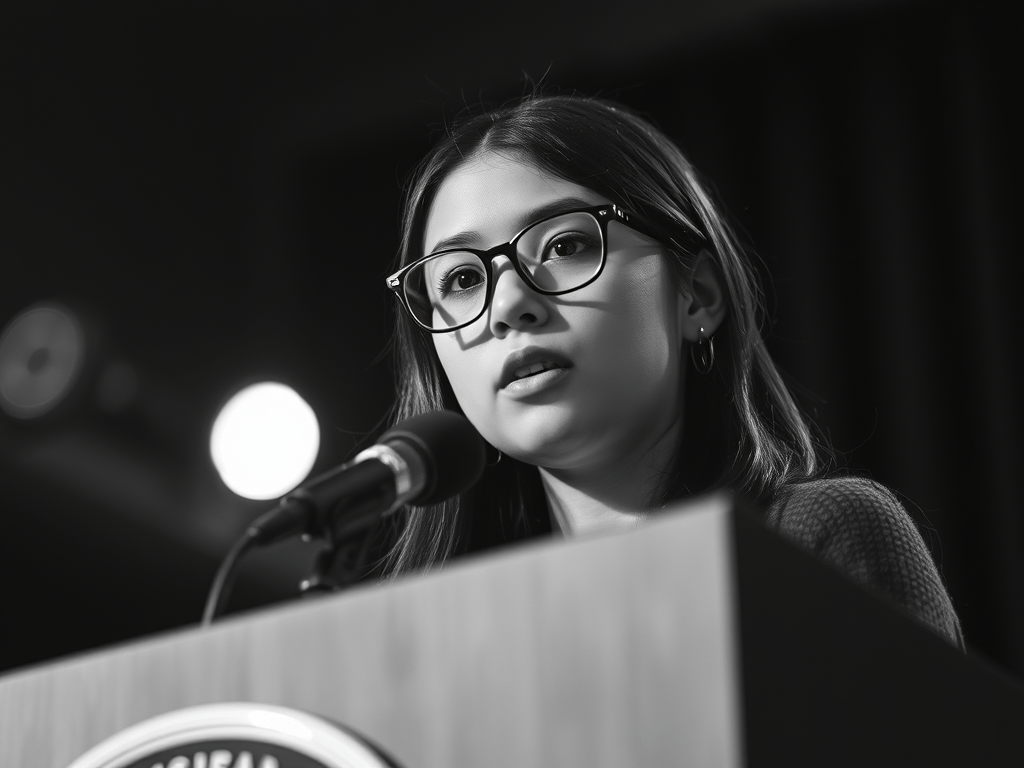
I encouraged them as they stood behind the podium and learned to speak with conviction about something they were just beginning to understand.

It felt important.

It felt right.

(It still does.)

Then I got married. Had kids. Decided to teach them at home… and found Charlotte.

I came to her the way a lot of homeschooling moms do— looking for something that wasn’t just checking boxes. I wanted something more. Something that intertwines story, fosters curiosity, encompasses the whole person, and makes sense of how children learn.

Once I discovered her, I actually found myself having a bit of an educational identity crisis. I couldn’t instantly connect what and how I had been teaching with what I felt I should be teaching now. At least, not right away.

When people ask me whether debate is really compatible with a Charlotte Mason education— whether the formal structure, the research demands, the timed rounds and the rebuttals feel too institutional, too mechanical, too “un-Masony”— I understand. I do. I wrestled with that question myself until I realized I didn’t need to make debate fit my newly-found educational philosophy.

As I dug in deeper and looked closer, I found that Mason gave me language for what I had been doing with debate for years before I ever really knew it.

In fact, Mason’s philosophy is actually *in* what I was doing all along.

Let me allow Mason to help me show you why.

1. Charlotte advocates that you only truly know what you can tell.

That’s the whole premise of narration, isn’t it?

“A narration should be original as it comes from the child,” Mason wrote, “that is, his own mind should have acted on the matter it has received.” Not repeated. Not regurgitated. Not filled into a blank on a worksheet. Acted upon.

Owned.

When a debater builds a case, she isn’t reciting sources. She is narrating her research— deciding what matters, what the evidence actually establishes, what the other side will say, what she genuinely believes about a real problem in the real world. Her own mind has to act on what it has received.

Mason called narrating “an art, like poetry-making or painting, because it is there, in every child’s mind, waiting to be discovered” (Home Education, Vol. 1, p. 231).

My contention is that debate is where that art is tested. It is narration made accountable to an audience.

Made rigorous by opposition.

Made honest by the fact that you actually have to know what you are talking about. (Because people will call. you. out.)

And here is where the “true knowing” gets undeniable:

Consider a student who has spent an entire academic year on the current (25-26) NCFCA resolution: The United States Federal Government should significantly reform Congress. The debater doesn’t read a textbook chapter about the legislative branch and move on. She reads constitutional scholars and policy analysts. She studies the history of congressional reform, the mechanics of the filibuster, the appropriations process, the architecture of committee power. She reads arguments she disagrees with— and has to understand them well enough to take them apart.

(One could also see the depth of research this skill demands as yet another Charlotte Mason principle supported. Debate is the table. The resolution is sets it. And the debater itself, with every angle she reads and researches… spreads her own feast of ideas about the subject itself. Is that not a living, working example of there being “no education but self-education?”)

The debater discusses what she is learning in practice rounds. In constructive speeches. In cross-examinations where a quick opponent finds gaps in her thinking and forces her to fill it. On the spot.

She writes cases. Revises them. Throws them out. Writes and revises yet better ones.

She narrates— in Mason’s truest sense— dozens of times, in countless forms and ways, in front of a variety of audiences.

By the end of this year? I guarantee that debater knows more about the inner workings of Congress than most American adults. Not as a list of memorized facts. Self-educated with a living knowledge — the kind she can speak about confidently behind a podium and just as comfortably across a dinner table. This knowledge is the kind that would leave most adults quietly reaching for their phones to find a talking point or two just to engage.

And that knowledge? It’s not just her’s now… but for years to come.

The knowledge is hers because she has spoken it, defended it, refined it, and survived someone’s best effort to take it apart. It is not veneer. It is not sawdust. (More about that later.)

It is genuinely, deeply, irreversibly hers.

That is Mason’s narration at its fullest expression.

2. Charlotte advocates the discipline of habits.

That’s Mason’s seventh principle. And she wasn’t talking about rigid routines for their own sake.

She was talking about the shaping of a person.

“Every day, every hour, the parents are either passively or actively forming those habits in their children upon which, more than upon anything else, future character and conduct depend” (The Original Home School Series, p. 92).

Debate forms habits with a particular kind of intensity. The student who is learning to argue well has to develop the habit of attention to a topic, to a text, and to an opponent’s actual words. The habit of researching carefully. The habit of organizing their thoughts. The habit of choosing language purposefully. The habit of time management— in prepping the arguments and evidence before the round and how you use the time you speak inside the round itself.

She has to learn— through experience, not lecture— that a careless claim will be exposed. And that a well-reasoned one will hold. (Hopefully.)

This is not artificial structure in the way Mason feared. It doesn’t bypass the child’s mind with pre-packaged thinking.

It demands that the child’s mind do the hard work.

The structure exists not to replace thought. But to make thought rigorous.

3. Charlotte advocates that the mind feeds on ideas, not just information.

Mason’s eighth principle is maybe her most urgent one: “In saying that ‘education is a life,’ the need of intellectual and moral as well as of physical sustenance is implied. The mind feeds on ideas, and therefore children should have a generous curriculum.”

And then this, which gives me pause every time I read it:

“For the mind is capable of dealing with only one kind of food; it lives, grows and is nourished upon ideas only; mere information is to it as a meal of sawdust to the body.”

Sawdust.

That’s the indictment of so much of what passes for education right now. And honestly? It applies to a certain kind of debate training, too. A debater who speed-reads evidence she doesn’t understand, who wins rounds on technical points rather than genuine engagement— she has consumed sawdust. She has information without ideas.

But debate, learned and taught well, is one of the richest feasts I know.

Charlotte says, “Thought breeds thought; children familiar with great thoughts take as naturally to thinking for themselves as the well-nourished body takes to growing” (The Original Home School Series, p. 303). Debate done well creates an appetite for real food that carry students beyond school into life.

The topics NCFCA students research aren’t hypothetical. They connect directly to the world those students are about to step into. The depth required doesn’t allow for shortcuts. The prep work, the rounds, the sharp opponent who will find weaknesses in their thinking— none of it permits them to stay on the surface.

Mason insisted that what we offer children must not be “watered-down, broken into steps, or made easy.”

In a world where reading, writing, and research are being steadily simplified— where the friction of real learning is being engineered away (see my blog post about that here)— debate is one of the last places where a student’s knowledge is on its full, vulnerable, authentic display.

A Bit about debate Charlotte would NOT advocate.

A word of honesty, because I think it’s important. I don’t defend every form debate takes.

And I don’t think Charlotte would, either.

I referenced this style previously: the circuit-style performance that prizes speed over clarity, that rewards jargon over genuine communication, that trains students to gasp for air to increase words per minutes versus persuade a real person. That’s a different type of debate. (I’d argue whether it even is debate.) I believe Mason would have had a problem with it. She was rightly suspicious of any structure that substitutes itself for genuine thought.

“The function of education,” Mason wrote, “is not to give technical skill but to develop a person” (A Philosophy of Education, Vol. 6, p. 147).

Technical skill in service of nothing is not education.

But skill in service of truth— the ability to take what you genuinely understand and communicate it with precision and courage— that is exactly what she was after.

I know this because I was teaching it before I had her words for it.

We are not training students to win rounds.

We are training them to think. And then to speak with the confidence that genuine thinking earns.

Charlotte Mason would appreciate this.

It is narration— grown up, made public, made answerable.

It is the feast of ideas made active.

It is discipline in service of life.

When I began teaching debate the way I do so many years ago, I was teaching it in a Charlotte Mason way. I just didn’t know that’s what I was doing yet.

I was already in the room, already teaching, already believing— without the words for it— that argument was a form of knowing, that speaking well was a form of thinking, that the discipline of a good case was the discipline of a good mind.

She just handed me the language.

And sometimes that’s what a philosophy does. It doesn’t change what you’re doing.

It tells you why you were really doing it all along.

the only way out is through: Image Bearing, education, and the true cost of AI

A Word before we begin.

I am passionate about teaching.

My dad was a teacher for decades, off and on, throughout my childhood and teens.

I have blinked and— somehow— I am now well into two decades of teaching myself.

(I’m still working out how, exactly, that happened.)

I want to be transparent about what this post actually is not. It is not a polished position paper. It is not a formal research summary. It is something more like what happens when my brain has been carrying a growing weight of concern for long enough that it just needs to become words on a page.

These thoughts have been living in me for a while now— surfacing in quiet moments of lesson prep, interactions with students, in conversations with other educators, in the way I watch my own children move through their days. I have turned them over and over, tested them against what I see in my classrooms and what I feel at my own kitchen table.

And I finally decided the best thing to do with all of it is to just write it down.

It might even be a bit of an educational ramble. But I want to wrestle with my words around this concern that I have…

This bit of a sinking feeling when it comes to education and educating.

This wondering mixed with worry when I watch my students and my own children look at the world around them and wonder where they will fit in it.

The world is changing so fast, I’m just not quite sure what to say.

(And friend, that is not something I say lightly. I tend to always have something to say. Ask anyone who knows me.)

Here’s the thing, though: I am not “just” a teacher sitting here writing this.

I am also a parent sitting exactly where you are sitting— looking at my own kids and feeling the same overwhelm of love mingling with uncertainty. (I’m sure you are not a stranger to this particular mixture of emotion…)

My children are walking into this same future. That’s not an abstraction for me.

It’s my daughters. It’s my son.

Which means everything I’m about to say, I feel with my whole self— not just as an educator, but as a mother who is wondering on how to make the same bets on the same uncertain future that you are.

The Old Way is wrong.

We are standing at a genuinely strange moment in history. The future our kids are walking toward looks different from anything we were prepared for— and I think most of us feel that, even when we’re not quite sure what to do with the feeling.

The advice we were given? The path that seemed reliable?

Do good in school. Get a degree. Get a good thinking job.

That map seems like it will no longer be accurate.

As the adults in these children’s lives, we owe them something better than outdated directions.

Here’s what I am coming to believe, from years in this work and now watching my own children grow: the skills that will matter most in what’s coming are the same ones that have always made humans most fully human.

(Beyond that, they showcase who we are as Image Bearers. But more on that later.)

I’m talking about the ability to listen so carefully that you hear what the other person couldn’t quite say. To hear what is actually being said under and around words. To know what you believe and why… and communicate it well. To tell a story that moves people and connects them to The Story.

These aren’t extras.

They aren’t enrichment.

They are the foundation.

It’s one of the main reasons I teach what I do.

I teach speech and debate because when a person learns to debate, something happens that goes far beyond learning to argue. They learn that ideas have real weight and real consequences. They learn to examine a claim— really examine it— and ask:

Is this actually true?

Is this something we should believe and do?

What happens if we take this idea and follow it all the way through?

They learn to disagree with someone respectfully— which means they first have to genuinely understand what that person actually believes and why. (This is harder than it sounds. Trust me. Actually, you probably do have an idea of how hard that is.)

In a world increasingly flooded with generated content, recycled talking points, and information that sounds authoritative (whether it is or not)— the capacity to actually process those questions is not just nice to have.

It is survival skill.

I want your children and my children to be the ones in the room who can say wait— and mean it.

Who can slow things down to ask the right questions.

It only comes from practice. It comes from wrestling with words, learning to choose the right ones, and being vulnerable enough to share ideas in front of others, face-to-face. (Not screen-to-screen. But that’s another blog post for another day.)

It comes from having argued and won.

It comes from having argued and lost— and having to sit with why.

It is hard work, this friction with ideas and words and identity.

But it is good work.

It is crucial work.

Let me talk about something I love even more than speech and debate:

Story.

Think about every culture that has ever existed on this earth. What do they all have in common? Not language. Not geography. Not customs or clothes.

Story.

Every single one of them.

Story isn’t just something we tell. It is something that tells us. It shapes the way we understand who we are, where we came from, what we owe each other, and what we are reaching toward. The stories a culture passes down are not just entertainment or history— they are formation. They are the invisible architecture of a people.

(And the stories we tell ourselves? Quietly, in the small hours? Those are forming us too, whether we know it or not.)

This is why it matters so deeply what stories our children are given— and what stories they are learning to tell. Because a child who can shape a story is a child who is learning to share meaning, not just consume it. They are learning that the world is not just a series of things that happen to them— but something they have a voice in and can bear witness to and have a hand in. Something they can pass on.

Here is the thing I keep coming back to: we were made by a God who is, at His very core, a Storyteller. The whole of Scripture is not a rulebook or a list. It’s not a theology “textbook”— it is a story. With a beginning and a crisis and a turning point and a redemption and a promised ending that is better than anything we can imagine. When we teach our children to tell true stories— to tell The True Story— we aren’t just telling them to find the words, to shape plot, to speak with honesty and intention.

We are not just teaching a skill.

We are echoing the One who started our Story when He spoke the first words into the dark.

And called it good.

A child who knows how to tell their own story knows who they are. And a child who knows who they are is far harder to manipulate, mislead, or simply sweep along by whatever current is moving fastest.

Wrestling with words as resistance.

There is a practice I use in my home and in my classrooms that is over a hundred years old— and I am convinced it is one of the most radical things we can do for children right now.

Charlotte Mason called it narration: the simple, demanding act of closing the book and telling back what you just took in, in your own words, from your own mind. No prompts. No multiple choice. No algorithm to autocomplete your thought.

Just you, and what you actually understood, and the work of making it yours.

It sounds simple.

But simple is not easy.

And that difficulty is precisely the point.

Narration forces a child to own their thinking— to reach for their language, to discover what they actually grasped and what slipped past them. In a world where any text can be instantly summarized by a machine, teaching children to re-tell from the inside out is not a nostalgic, 1800s-based skill.

Today, it is resistance.

When I sit across from my own children and watch them find words for what they’re thinking and feeling, it takes more time and effort than slipping them a worksheet. But I do it because the ability to articulate your inner life— to name what you think and why, to say it out loud and own it— is one of the most protective things for both the ideas and identity a person can have.

I believe that with everything in me.

What we are up against

Newsflash: we humans gravitate toward the path of least resistance.

There has always been a version of this struggle in education— students who want the grade without the growth, the answer without the wrestling. That has always been the part of teaching.

(Frankly, it’s the part that wears me down the most.)

But something has shifted. The ease available to students now is unprecedented. And I have watched it— I have felt it— as students simply stop reaching and working and start accepting whatever is handed to them, then hand it to me with a look as though I should be satisfied with mediocrity.

(Sidenote: I’m not speaking about every student. I have some hardworking, delightful, amazing students. I am talking about an overarching shift in caliber as a whole.)

Here is what makes it harder: it’s not just that they want it to be easy.

They expect it.

Ease has led to entitlement, and somewhere along the way, the systems meant to support education have started agreeing with things that foster its decline. I am handed standards that ask less, that ask me to assign higher grades for less work (and A, B, C, etc. are NOT what they used to be). There is a quiet but unmistakable message that rigor itself is somehow unkind.

I am being asked to lower the bar at the exact moment in history when raising it has never mattered more.

I want to pause here and be clear about something, because I think it matters:

I am not advocating for raising the bar past what is developmentally appropriate. There is already a strange tendency in education to push harder in all the wrong directions— rushing literacy into four-year-olds who need to be playing, drilling academics into children whose brains are simply not yet built for that kind of abstraction.

That is not rigor.

That is anxiety dressed up as standards.

What I am talking about is something different entirely— the friction that belongs to each stage. The age-appropriate struggle that actually builds something. And about how we are systematically removing that struggle the moment technology offers an easier path.

It produces a deeply strange result. We expect kindergartners to read fluently and third graders to perform on standardized tests… but somehow, by college, students cannot construct an outline without assistance.

We accelerated the wrong things and smoothed away the right ones.

The friction we are so eager to eliminate is not the enemy of learning.

In most cases, it is the learning.

I am finding myself becoming more rigid— not because I want to be stubborn— but because I know what is being given up when the students do not.

I refuse to believe this is what learning has to become.

The exhaustion I carry isn’t from the work. It’s from loving students enough to grieve what they’re losing while they’re becoming too ignorant and too comfortable to notice it’s gone.

I am not afraid of artificial intelligence as a tool. Used wisely, it’s remarkable. But I am genuinely concerned about what happens to a generation of children who grow up using it before they’ve built the skills to know how to use it well.

Here is the risk I want to name clearly: AI doesn’t just threaten jobs. Used without wisdom, it quietly erodes the very capacities we need in order to think at all. If your child never learns to construct an argument from scratch, they won’t recognize when an AI-generated argument is wrong, or manipulative, or missing something essential. If they never struggle to find their own words, they lose the ability to notice when someone else’s words are shaping them toward a conclusion they didn’t choose and don’t want.

There is a version of the future where AI thinks for an entire generation, and that generation simply accepts it.

Not because they aren’t intelligent.

But because they never built the muscles to do otherwise.

The friction of real thinking feels unnecessary when something smooth and fluent is available on demand.

(And honestly? I think about this when I watch my own children reach for easy answers. It makes me more committed to this work, not less.)

Communication, debate, and storytelling are how we build those muscles. They are what grows discernment— so they can show discernment.

So they can share discernment.

I believe something that puts me in a somewhat unique position to speak on all of this is the fact that I don’t just homeschool my kids or teach one age group. I have my toes in all of it. I teach elementary children, junior high students, high schoolers, and college students outside my home. I see the arc— all of it— and what disconcerts me more than anything right now is that I am watching the same pattern at every single level.

The expectation of ease doesn’t arrive in college.

It is already fully formed long before then.

It is being shaped early, normalized young— and by the time students reach higher education, the idea that learning should require genuine struggle feels foreign to them. Or worse: offensive.

I’m concerned this isn’t a phase or a generational quirk.

It is systemic.

It is accelerating.

And it is starting earlier than it ever has before.

Which tells me the place to address it is not college.

It isn’t even high school.

It is now— before the expectation of effortlessness calcifies into something we can no longer reach through.

So what do we do?

We hold the line.

We do exactly what we are encouraging our children to do.

We do our own hard thing… right alongside them.

We hold the line on appropriate rigor.

We keep expecting real work from our children— even when they push back, even when it causes friction, even when letting it go would be so much easier. I know that temptation intimately. I live it in my own home, with my own kids.

It is hard to be the source of the friction. It is hard to watch your child struggle and not rescue them. I know. I know.

But that struggle is not a sign that something is wrong.

It is the sound of a mind being built.

It starts with learning to speak in front of people when it’s terrifying. It starts with defending a position and discovering what you actually believe. It starts with writing a story and finding out you have something worth saying.

The people who will shape what comes next are not the ones who use AI the most. They are the ones who think rigorously enough, know themselves clearly enough, and communicate compellingly enough to direct it— and know when to push back against it.

The only way to get those skills is to be uncomfortable enough to acquire them.

I will be honest with you— I wonder, often, if I’m preparing my own kids well enough for a world I can’t fully predict.

Teaching these skills (and trusting my God!) is my answer to that fear. It’s the most honest and hopeful thing I know how to do.

The goal has never been to produce children who can compete with machines. It has always been to form people who are fully human— curious, discerning, grounded, and capable of genuine connection. People who bring something to the room that no algorithm can replicate.

Because they are what AI can never be.

We are Image Bearers.

We were made in the image of a God who spoke the world into being. Who told stories. Who revealed Himself through burning bushes and parables and the arc of an entire human history. Who reasons with us, invites us to come and argue, asks us to give account for what we believe and why.

To communicate, to tell truth in creative ways, to wrestle honestly with ideas— these are not merely academic skills.

They are acts of image bearing.

When a child stands up and finds words for what they believe, they are doing something that reflects the nature of the One who made them. When they learn to listen and reason and persuade with integrity rather than manipulation, they are practicing what it looks like to bear that Image with dignity.

This is why I cannot be indifferent to a generation that outsources its thinking and abandons its voice. It is not just an educational loss.

It is a human loss.

We are cultivating something sacred when we teach children to speak well, argue honestly, and tell stories that are True— and we diminish that sacredness when we let them believe that a machine can do it for them.

We are forming whole people, fully alive to who they are, Whose they are, and why it all matters.

That hard work has never mattered more to me than it does right now.

And it is the greatest privilege of my life to do it alongside you with this generation we are raising.

As an educator.

And as a mom.