the art of argument: why charlotte mason would approve of what we do in debate

I taught debate before I ever heard of Charlotte Mason.

For years, I stood in front of students and taught them how to research, how to argue, how to listen carefully to an opponent and find the gap in their thinking.

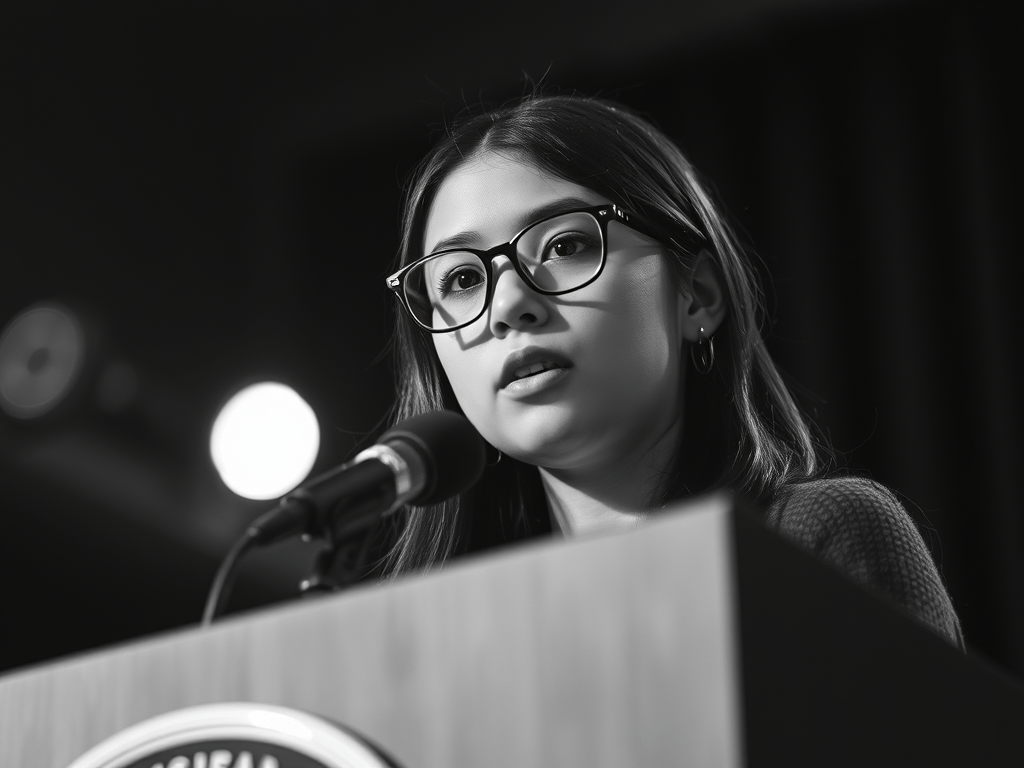
I encouraged them as they stood behind the podium and learned to speak with conviction about something they were just beginning to understand.

It felt important.

It felt right.

(It still does.)

Then I got married. Had kids. Decided to teach them at home… and found Charlotte.

I came to her the way a lot of homeschooling moms do— looking for something that wasn’t just checking boxes. I wanted something more. Something that intertwines story, fosters curiosity, encompasses the whole person, and makes sense of how children learn.

Once I discovered her, I actually found myself having a bit of an educational identity crisis. I couldn’t instantly connect what and how I had been teaching with what I felt I should be teaching now. At least, not right away.

When people ask me whether debate is really compatible with a Charlotte Mason education— whether the formal structure, the research demands, the timed rounds and the rebuttals feel too institutional, too mechanical, too “un-Masony”— I understand. I do. I wrestled with that question myself until I realized I didn’t need to make debate fit my newly-found educational philosophy.

As I dug in deeper and looked closer, I found that Mason gave me language for what I had been doing with debate for years before I ever really knew it.

In fact, Mason’s philosophy is actually *in* what I was doing all along.

Let me allow Mason to help me show you why.

1. Charlotte advocates that you only truly know what you can tell.

That’s the whole premise of narration, isn’t it?

“A narration should be original as it comes from the child,” Mason wrote, “that is, his own mind should have acted on the matter it has received.” Not repeated. Not regurgitated. Not filled into a blank on a worksheet. Acted upon.

Owned.

When a debater builds a case, she isn’t reciting sources. She is narrating her research— deciding what matters, what the evidence actually establishes, what the other side will say, what she genuinely believes about a real problem in the real world. Her own mind has to act on what it has received.

Mason called narrating “an art, like poetry-making or painting, because it is there, in every child’s mind, waiting to be discovered” (Home Education, Vol. 1, p. 231).

My contention is that debate is where that art is tested. It is narration made accountable to an audience.

Made rigorous by opposition.

Made honest by the fact that you actually have to know what you are talking about. (Because people will call. you. out.)

And here is where the “true knowing” gets undeniable:

Consider a student who has spent an entire academic year on the current (25-26) NCFCA resolution: The United States Federal Government should significantly reform Congress. The debater doesn’t read a textbook chapter about the legislative branch and move on. She reads constitutional scholars and policy analysts. She studies the history of congressional reform, the mechanics of the filibuster, the appropriations process, the architecture of committee power. She reads arguments she disagrees with— and has to understand them well enough to take them apart.

(One could also see the depth of research this skill demands as yet another Charlotte Mason principle supported. Debate is the table. The resolution is sets it. And the debater itself, with every angle she reads and researches… spreads her own feast of ideas about the subject itself. Is that not a living, working example of there being “no education but self-education?”)

The debater discusses what she is learning in practice rounds. In constructive speeches. In cross-examinations where a quick opponent finds gaps in her thinking and forces her to fill it. On the spot.

She writes cases. Revises them. Throws them out. Writes and revises yet better ones.

She narrates— in Mason’s truest sense— dozens of times, in countless forms and ways, in front of a variety of audiences.

By the end of this year? I guarantee that debater knows more about the inner workings of Congress than most American adults. Not as a list of memorized facts. Self-educated with a living knowledge — the kind she can speak about confidently behind a podium and just as comfortably across a dinner table. This knowledge is the kind that would leave most adults quietly reaching for their phones to find a talking point or two just to engage.

And that knowledge? It’s not just her’s now… but for years to come.

The knowledge is hers because she has spoken it, defended it, refined it, and survived someone’s best effort to take it apart. It is not veneer. It is not sawdust. (More about that later.)

It is genuinely, deeply, irreversibly hers.

That is Mason’s narration at its fullest expression.

2. Charlotte advocates the discipline of habits.

That’s Mason’s seventh principle. And she wasn’t talking about rigid routines for their own sake.

She was talking about the shaping of a person.

“Every day, every hour, the parents are either passively or actively forming those habits in their children upon which, more than upon anything else, future character and conduct depend” (The Original Home School Series, p. 92).

Debate forms habits with a particular kind of intensity. The student who is learning to argue well has to develop the habit of attention to a topic, to a text, and to an opponent’s actual words. The habit of researching carefully. The habit of organizing their thoughts. The habit of choosing language purposefully. The habit of time management— in prepping the arguments and evidence before the round and how you use the time you speak inside the round itself.

She has to learn— through experience, not lecture— that a careless claim will be exposed. And that a well-reasoned one will hold. (Hopefully.)

This is not artificial structure in the way Mason feared. It doesn’t bypass the child’s mind with pre-packaged thinking.

It demands that the child’s mind do the hard work.

The structure exists not to replace thought. But to make thought rigorous.

3. Charlotte advocates that the mind feeds on ideas, not just information.

Mason’s eighth principle is maybe her most urgent one: “In saying that ‘education is a life,’ the need of intellectual and moral as well as of physical sustenance is implied. The mind feeds on ideas, and therefore children should have a generous curriculum.”

And then this, which gives me pause every time I read it:

“For the mind is capable of dealing with only one kind of food; it lives, grows and is nourished upon ideas only; mere information is to it as a meal of sawdust to the body.”

Sawdust.

That’s the indictment of so much of what passes for education right now. And honestly? It applies to a certain kind of debate training, too. A debater who speed-reads evidence she doesn’t understand, who wins rounds on technical points rather than genuine engagement— she has consumed sawdust. She has information without ideas.

But debate, learned and taught well, is one of the richest feasts I know.

Charlotte says, “Thought breeds thought; children familiar with great thoughts take as naturally to thinking for themselves as the well-nourished body takes to growing” (The Original Home School Series, p. 303). Debate done well creates an appetite for real food that carry students beyond school into life.

The topics NCFCA students research aren’t hypothetical. They connect directly to the world those students are about to step into. The depth required doesn’t allow for shortcuts. The prep work, the rounds, the sharp opponent who will find weaknesses in their thinking— none of it permits them to stay on the surface.

Mason insisted that what we offer children must not be “watered-down, broken into steps, or made easy.”

In a world where reading, writing, and research are being steadily simplified— where the friction of real learning is being engineered away (see my blog post about that here)— debate is one of the last places where a student’s knowledge is on its full, vulnerable, authentic display.

A Bit about debate Charlotte would NOT advocate.

A word of honesty, because I think it’s important. I don’t defend every form debate takes.

And I don’t think Charlotte would, either.

I referenced this style previously: the circuit-style performance that prizes speed over clarity, that rewards jargon over genuine communication, that trains students to gasp for air to increase words per minutes versus persuade a real person. That’s a different type of debate. (I’d argue whether it even is debate.) I believe Mason would have had a problem with it. She was rightly suspicious of any structure that substitutes itself for genuine thought.

“The function of education,” Mason wrote, “is not to give technical skill but to develop a person” (A Philosophy of Education, Vol. 6, p. 147).

Technical skill in service of nothing is not education.

But skill in service of truth— the ability to take what you genuinely understand and communicate it with precision and courage— that is exactly what she was after.

I know this because I was teaching it before I had her words for it.

We are not training students to win rounds.

We are training them to think. And then to speak with the confidence that genuine thinking earns.

Charlotte Mason would appreciate this.

It is narration— grown up, made public, made answerable.

It is the feast of ideas made active.

It is discipline in service of life.

When I began teaching debate the way I do so many years ago, I was teaching it in a Charlotte Mason way. I just didn’t know that’s what I was doing yet.

I was already in the room, already teaching, already believing— without the words for it— that argument was a form of knowing, that speaking well was a form of thinking, that the discipline of a good case was the discipline of a good mind.

She just handed me the language.

And sometimes that’s what a philosophy does. It doesn’t change what you’re doing.

It tells you why you were really doing it all along.

Buffalo Bill and the Wild West (free journaling sheets + learning enrichments)

There are two things that I simply have adored throughout this academic year: the concentration and literature suggestions from A Gentle Feast for learning about the 1800s… and my time sharing some of those enchanting stories with our dear co-op, EspritGVL.

I’ve had the delight of teaching Language Arts for both primary (1st-2nd) and lower elementary (3-4th) grades this year, and our sweet primary class is finishing up our time with Buffalo Bill next week– and will be having our own Wild West show(case) to celebrate our learning. (I’ll be doing another post about our activities, Wild West poster replicas, and our party once it is all done.)

The book that we used to learn about Buffalo Bill was the d’Aulaire’s version of the tale. They have a whole series of beautiful books that are lovely to learn from. (Sidenote: as will many books that cover historical characters, you might find some political views that you don’t agree with in there. If that’s the case, take the opportunity of those moments to discuss and learn why we do things differently now.)

To help my little learners in guiding narration and storytelling, copywork, and even a touch of spelling, they got to work through these Buffalo Bill journaling sheets that I created for them. I’d love to share them with you as well! We split the story into two weeks-worth of reading, so had a set of 5 pages per week to work through.

Feel free to download these sheets for your own personal use and share this post with others that might like to use them as well. 🙂

As a part of this unit, our class loved learning about buffaloes! We found out something pretty amazing about them. Unlike cows, who turn and run away from storms because they are afraid, buffaloes turn west and charge right into the gale to get through it faster! I wrote a little poem for our class about this new buffalo fact and shared it with them. Afterwards, the kiddos drew prairies with buffalo on it and also role-played the poem with some stuffies and a storm cloud. 🙂

I made the little poem into an animated video , if you’d like to learn more about the remarkable feature buffaloes have of facing storms.

(It must be mentioned that I have no idea how to animate anything, so I just winged this. No judgement, ha!)

Our class time doesn’t leave room for a lot of clip-watching, so I often send extra enrichment links to the parents if their student wants to learn more at home. If you are reading about Buffalo Bill now (or soon), these videos are great ones to add to the facts (and fiction) behind the tall tale.

About Buffalo Bill
Real footage of Buffalo Bill from 1908
Enhanced footage of Buffalo Bill’s Wild West Show
The Legends of Wild West: Buffalo Bill (an animated biography)

About Buffalo
All about American Bison (aka Buffalo)
Buffalo and Native Americans

About Native Americans
(same link above under Buffalo)
Cultural Perspectives of Art and Native Americans

We have now reached the part of our story process that I love the most! Once we finish a book, the students get to spend a week creating something that connects back to what we learned in some way… and then they get to showcase it to the entire class!

The creativity and excitement I see from them is just so encouraging, especially as a communication teacher. Most of my communication students are high school and college-aged, and somewhere along the way, fear and intimidation takes root and many students just hate the thought of getting up and sharing anything in a “formal” way. To give children opportunities to share and present in the smallest, but most pleasantest of ways, does a lot to preventing public speaking from turning into something scary and intimidating.

I’m looking forward to seeing what all my students bring to share with everyone, before we have a fun Wild West party! (I’m making some Western-themed carnival-like games… so wish me luck!)

I hope these few tools and resources add extra enchantment to an already exciting character and story!


a day of love and learning: a free valentine’s day printable

(Let’s just not talk about the price of eggs currently, shall we? But let’s just say if my husband gets me a chicken coop and a starter flock for V-day, I won’t be disappointed. HA!)

As we all know, Valentine’s day is right around the corner! I’ve made fun little freebies for the day of love before, with ideas for the week of Valentine’s– including our “I love you fondue” dinner. It’s a special little tradition that’s evolved over the past few years, and now I couldn’t imagine February the 14th without it.

We like to take a few days to celebrate all things heart and love themed, and this year it looks like we will be starting tomorrow and bringing it through the whole week instead of stopping on Tuesday. We have a Valentine exchange in our co-op on Thursday, and then will probably do some love-themed fun in “cousin school” the next time it comes around.

We might even make a batch of these lovely red cookies for a Valentine tea!

In the meantime, I threw together a few little journaling pages for us to use this week, as we take time to look at 1 Corinthians 13, say “I love you” in a few languages, “find our heart” in a maze, and make love notes full of all sorts of food puns.

I’d love for you to download this freebie and use it in your home! You can break it apart over several days, or use it all on one; with a read aloud or two and narration, some heart math, and a science video about the heart itself … it could be a full day of “loving” school.

I hope this week is full of connecting and appreciating and loving the people who live with you. ❤


If you like this freebie and are curious about other journaling and homeschool resources I have created, please visit me over here and check this out.

jam thumbprint cookies: a 5-ingredient (valentine) treat

My mother-in-law grows her own raspberry bushes. Rows and rows of them.

The kids love going to Wisconsin in the summer and just walking out there and stuffing their faces with these brilliantly red sweet snacks anytime they want.

The fruit is so abundant, Mom makes pies and cakes and jam galore… and then sends us back south, coolers packed with ice and her famous freezer jam. Throughout the year, we pull out a jar at a time for bread and sandwiches and even ice cream topping here and there. It’s divine.

The other day, I saw a picture of some beautiful raspberry thumbprint cookies, and knew that that our jam would have yet another application. I used this recipe as a base, but did make some tweaks, and will use them here. 🙂

We made a batch of these cookies for our poetry tea time, and the kids loved making them… and eating them. Because they were so very cute and festive, they will definitely be a part of our Valentine’s week coming up. ❤

raspberry jam thumbprint cookies

Ingredients
4 oz soften cream cheese
1/2 cup butter (room temp)
1/2 cup sugar + 2 Tbs
1/2 cup flour + 2 Tbs (all purpose)
jam (to fill the thumbprints)

Steps
1) Blend the cream cheese and butter together well. (As in fully incorporated.)
2) Mix in the sugar.
3) Mix in the flour, a “sprinkle” at a time. (The dough is going to be dense and not like “regular cookie dough.”
4) Wrap in plastic wrap and refrigerate for 30 minutes or longer. (We were impatient and waited 30 minutes.)
5) Put parchment paper or a silicon sheet on a baking sheet before making cookies. (We use something similar to these.)
6) Take tablespoons of dough and roll them into little balls before placing them on the sheet. The won’t really rise/spread, so you don’t have to worry about spacing much.
7) Once the cookie balls are placed on the sheet, press your thumb in them to make a “pool.” Don’t go all the way to the bottom. 🙂
8) Use a spoon to place some jam of choice into the divots in the cookies.
9) Preheat the oven to 350*. While the oven preheats, place the cookies in the fridge.
10) Once oven is preheated, take the cookies out of the fridge and into the oven, baking them for 10-12 minutes, until they are gold around the edges. When you take them out, they will still be soft, but they will harden as they cool.

They are simple, taste amazing, and look impressive. Create this colorful cookie (with or without the kiddos!) and enjoy.

Freedom’s School: learning Black History through Living Books ( + free journaling sheets!)

“We want a wider range of knowledge than the life about us affords, and books are our best teachers.” – Charlotte Mason, Ourselves

Our family has been learning about and focusing on the 1800s in American History all this year. We’ve learned about wagons and Gold Rushes and have made our way smack into the Civil War in the past couple of weeks.

Our kitchen table and couch has been a series of good discussions about hard things and parts of our nation’s past that we aren’t proud of. In a time of history were it is easy to want to just look at timelines and learn about battles, we are stopping to step into the stories. We are allowing, as Mason puts it, “books to be our best teachers.”

There is a children’s book called Freedom’s School that has been on our shelves and read often with my oldest; but it was the first time my son (1st grade) really sat in on the reading and observed the pictures this year. And his questions came, just like my daughter’s did at his age.

Why?
Why didn’t white people want Lizzie and Paul to learn?
Why weren’t they ever able to go to school before?
Why didn’t they have the same things as the white school?
Why did their school catch on fire?
Why did they call it Freedom School?

It is such a thought-provoking book, and opens the door for discussions about prejudice + racism, hatred, emancipation, education, and what freedom is and how it comes. It became a bridge for us to talk about how the end of the Civil War didn’t mean that all was well and freedom and justice for all just magically happened.

Freedom’s School is a great one to add to your shelves at home, but if you can’t grab a copy or get to the library, here’s a video of the book being read aloud.

I also created some journal sheets to go along with the book for my 1st grader, and I’d love for you to be able to use them as well. Go ahead and download them and use them for your family. If you enjoy them, please feel free to pass this post along to your friends so they can benefit from the pages as well.

You’ll find a coloring page, drawing sheet, narration section, copywork from the story, and suggested spelling words (also from the text).

It is my hope that these pages will help document your journey through this fabulous story and others like them!

A Plum Creek Recipe: Dumplings

This little post is basically for my language arts class at our dear co-op… We are all reading On the Banks of Plum Creek together, and just finished the chapter where Ma makes duck and dumplings for Thanksgiving dinner. Because it is ohsofun to have things we read about come to life, I figured some of the students would love making and tasting some dumplings for themselves.

This recipe is taken from The Little House Cookbook, which is such a fun addition to use in your own kitchens while you step back into Laura’s world in the 1800 and early 1900s.

(I’ve only included the dumpling part of the recipe, and not the biscuit adaptation.)

White Flour Dumplings

Ingredients (makes 6 servings)
white flour, 2 cups unbleached all-purpose
salt, 1 heaping teaspoon
baking soda, 1 teaspoon
cultured buttermilk, 3/4 to 1 cup
cooked stew or 2 cups broth

Needed
bake-oven or skillet, 10 inch

For Dumplings
Have a kettle of stew or a skillet of broth simmering on the stove. In the bowl, mix dry ingredients well. Pour in 3/4th cup of the buttermilk and mix quickly with a fork. Your dough should be stiff but too moist for rolling; add remaining milk if needed.

With a soupspoon, drop the dough onto the boiling liquid, covering the surface. Let simmer on medium-low heat until dumplings puff and lose their gloss (8 to 10 minutes). Cover with a lid, reduce heat to low, and simmer another 8 to 10 minutes, until dumplings are cooked through. Dumplings in a skillet can be cooked uncovered by turning them halfway through.


If you aren’t a part of our fun group at EspritGVL this year and want a fun journey journal to use while you are reading On the Banks of Plum Creek yourself, check out this downloadable, printable Charlotte Mason-inspired resource. It includes activities, drawing sheets, narration pages, copywork pages, and spelling work suggestions and makes a great little keepsake of your time with Laura at Walnut Grove.

Winter & Christmas in the Big Woods (free download)

“They were so happy, they could hardly speak.”

Although we aren’t tucked away in a small cabin in the Wisconsin woods, I believe that this sentiment from Christmas in the Big Woods is exactly what we all still want, a couple hundred of years later.

The picture books of Little House in the Big Woods were new to our family this year– and I’m a little sad I didn’t discover them earlier! But better late than never, as they say.

The pictures in these excerpts from the chapter book are so great for little learners. My 4 year old and 1st grader love reading and re-reading these. I’m the Language Arts teacher for the primary grade in our Charlotte Mason-inspired co-op, and I included both Winter and Christmas books in the last couple of weeks to finish our semester up before our Winter break. They have been a perfect way to wrap up! In fact, our Pioneer Christmas celebration is this Thursday, and I’m so looking forward to it! (I’m thinking I’ll have a separate post, just for that!)

I created our some journaling pages for the class for both weeks, and I thought I’d include them as a freebie here! You’ll find activity pages, copywork, suggested spelling, and narration prompts for each picture book. Feel free to copy and use for your kiddos at home!

If you are looking for some guided time suggestions for the pages and the book, this is what we do at our co-op. 🙂

During the week at home, parents and their children enjoy the stories and fill out the sheets together at their own pace. Once we are all together, we read/review some poetry… and then jump right into the other 2 things per week: sharing our pages together and then the weekly literature-based activity.

For our Winter week, we borrowed from Ma’s Work Rhythm in the book… and since our co-op meets on Thursdays, we did the Thursday activity: butter churning! Each child got a chance at churning, and we watched the whole process of the cream turning into whipped cream before evolving into butter and buttermilk! They also observed how the closer to butter it becomes, the harder it is to churn it!

Last week for our Christmas day, we practiced our Poem Play that we will be performing for parents this week, shared our pages and showed off our stocking designs… and then went back to what we knew about the story to discuss how gifts were simple, handmade, and often made from ordinary things to create something new and beautiful. We then passed out brown paper bags, got some markers and crayons and ribbons, and used these few simple things to learn how to make gift bags! They are so simple and customizable… and are a perfect way to design gingerbread house and manger scenes as a gift bags to wrap small things or use to give away Christmas cookies!

Here’s a little snippet of the gingerbread house version I made as an example. I also made a nativity one in class itself, but cutting the back a bit shorter and makes the roof lower and steeper. It also turned out great!

The kids got so creative, decorating wreaths and snowflakes over their houses! Some even drew cats in Christmas hats in the windows.

I know that there are a lot of things to pull for our time and attention this time of year. Maybe you have the heart for all the Christmas things and 25 days of Winter Fun and Jesse Trees and a New book a day. Maybe you have the desire, but not the time or energy.

Maybe checking out these two books from the library, enjoying some free handouts and making memories around handmade, simple things is just what you need.

I hope this helps so much! ❤

__
Additional Resources:

Youtube read-aloud versions of the stories mentioned 🙂

Links to grab your own copies

Winter in the Big Woods

Christmas in the Big Woods

(sidenote: those links are affiliate links, which means if you use them to purchase the books, I get a small “thank you” from amazon.)

Other Little House lovelies

If you like these free Little House resources, please visit the Little House section of my Etsy store. You’ll find things for older ages, a piano books of Little House music, and more!

My thoughts on Among the Forest People… and free narration pages. 💛

Let me start off by whispering an admission that I hope every Charlotte Mason, living book loving, nature studying person won’t hate me for.

I really don’t like Burgess.

There. I said it.

I tried.

I really, really did.

But when I noticed my own kiddo’s interest dissipating, despite my attempts to enliven the words with pleasant readings, I knew it wasn’t just me.

I believe it was C.S. Lewis that said “a children’s story that can only be enjoyed by children is not a good children’s story in the slightest.”

So for us, as a daily inclusion to our studies… it was not a good fit. For them, or for me.

(If you and yours love Burgess, PLEASE. CONTINUE. But if you don’t… here’s your permission slip to stop trying. 😂)

Meanwhile, I must say the Among the ______ Stories are, well, a different story. They are delightful (SHORT) reads that pass along curiosity and information about the habitat and creatures… as well as a bit of character training without being annoyingly didactic.

Because I’m starting afresh with my newest little formal learner, I went ahead and created some low-key narration pages for my buddy this time around. We all know worksheets are NOT a requirement… but some students do better with a visual and something for their hands to do that connect directly with what they are hearing.

So, here we are. 🙂

I’d love for you to be able to use and benefit from these sheets as well. They have a banner for the student to copy the title on to, and a handful of lines for you or your kiddo to jot down a brief narration. Some pages are just for coloring… others have a prompt or two. I deliberately choose black and white for ease of printing at home and cost effectiveness. (It adds up, doesn’t it, friend?)

If you like what you see, I’d love for you to check out my other Charlotte Mason-inspired studies and guides over on Etsy. Just click here!

Now… here’s your free Among the Forest People sheets! 🐿

Adapting for your kiddos… and free narration pages 💛

So my firstborn: she loves drawing. While I would read our stories, she’d draw away, creating portraits of her favorite characters and scenes.

My buddy joined us this year in formal studies… and he needs his hands busy. I’m totally fine with him doing his mad matter and blocks to listen, but he wants to “make a book” like his older sister (this “book” is a folder of all her drawings). I will welcome any and all drawings he decides to do, but in the meantime, I’ve made a way to capture his narrations and allow him to have his “book,” too.

The moral of the story: what works for one kiddo might not work in the same way for all of them. Their age, stage, and giftings might require some reconfiguring. But isn’t that the absolute beauty of learning alongside your children? 💛


Also, fellow #agentlefeast families, these sheets work with the history readings for cycle 3, term 1, form 1. You have the plans and will know what to do.

https://www.canva.com/design/DAFJ0ZoHxEI/Ims2b4kPMxJxi6IKV1I6wQ/view?utm_content=DAFJ0ZoHxEI&utm_campaign=designshare&utm_medium=link&utm_source=homepage_design_menu

Two Bad Ants: fun activities and the Big 4

Spring and summer is the perfect time to bring out those bug books and studies… considering we can observe them all around us again. (Guess we’ll be doing a mosquito study soon. Sheesh!)

It was on our agenda a couple of weeks ago to study ants… and as I was perusing the library shelves for some fun reads to include, I came across Two Bad Ants. What a delightful little read, and it led to really great learning and play… and curiosity! Win win win!

If you have read other learning posts of mine, you know I’ve been a classroom teacher for years– and that time has shaped how I wanted to teach my own kiddos at home. We are Charlotte Mason/Classical-based (eclectic a bit) in general, but something that I find really shapes learning time well– inside and outside of the classroom– is remembering the Big Four: imagine, encourage, educate, and enjoy. (Note: Charlotte Mason herself was not a huge fan of “lesson plans” as she believed the best education–even only education– was self-education. I don’t disagree. Think of The Big 4 as a framework to hang principles on, not a lesson plan to stick to rigidly or you fail, okay?)

With that said, let’s walk through the Big 4 with this book, shall we?


Imagine

What’s so amazing about fun, living books is that they foster imagination in and of themselves! We don’t have to “try” to make the imagination come alive. Children are born with curiosity and imagination; our biggest challenge is to not get in the way! Two Bad Ants is SO fun in this department. It forsakes familiar words with descriptive language in a way that can made the book a series of riddles for the kids to mentally answer (especially younger ones!), and the perspective of the pictures make the book so fun to “enter” in. As your kiddos are listening to the story, don’t be afraid to pause and let them get curious! My kids asked some really great questions here, like “why do the ants call the grass a forest?” and “how do we know they landed in sugar?” and “why did the ants fly through the black slits in the wall?” What great opportunities to ask them questions back and get them thinking to answer their own questions! You can even take time here to “imagine” being ants or seeing how height and angles change perspective. Crawl on the floor and observe what you see differently, now that you are lower than normal. How about standing on a stool or chair? What do you see now?  

Another way to incorporate imagination is to basically allow them to get creative.

Do they want to make up their own story about the ant?

Put on a play?

Design their own ant playground… which makes me think of Honey I Shrunk the Kids…

Draw an ant? Great! Let them! This book made my 9 year old want to grab our Natural History book and check out all the ants there before deciding to draw her favorite. Awesome!

encourage

When it comes to this principle, I take it different ways at different times. The main way I try to think of incorporating encouragement is seeing what the Bible has to say about what we are learning/observing. What does it tell us about the object we are discussing, or the character we see in the story?

The Bible actually does talk about the ants and what we can learn from them. It tells us to consider the ants and be like them. Why? (Ask your kiddos!) Because they work hard and prepare well. What are some ways we can do that? That question led to a lot of good responses, and their answers included some things that we do as a family and some that we can improve on.

Another way that I like to think about encouragement is making sure that I’m seeing where my kids are growing and improving and making a point to encourage them in that. This isn’t lesson specific, per se. But even as we doing some activities with the book, and the kiddos were asking questions, I make a point to use positive feedback: “What a great question! Let’s see what we can learn about that!” Or “That’s a good observation; you looked really closely to see that!” I want to encourage their effort without making it about me and my “pride” or happiness in it– although I am both proud and happy when they are giving great attention and adding to their own learning!

Educate

Of course, “education” is something that can happen anytime, anywhere. We don’t have to plan or force it to happen. But in the “educate” category in my head is about me figuring what tools I need to give them and what goals I have for them. Basically, it’s asking myself what plates, napkins, silverware, and ingredients are needed for the “feast” that day. And just like every “feast”/buffet doesn’t have every single cuisine represented, I don’t think we need to feel the burden/obligation of making sure every. single.learning.moment has every single type of academic “food.” In other words– if I want to focus on science/nature during that time, I totally can without including fine arts and all the other things. 🙂

Here’s what I did after reading this book: I got out salt, sugar, and our little magnifying glasses. When my buddy asked how we knew the ants landed in salt, we used the book to answer that question for us– but then we decided to take a closer look at salt and sugar itself. It’s looks pretty similar when we look at it our “normal” way– but what if we take a closer look? At closer inspection, we can definitely see that salt and sugar AREN’T the same. We talked about the differences we could see with a little magnification– which ants would have naturally, being smaller and much closer and with different kinds of eyeballs!

We also did a taste test and observed those differences, too. 😉

Later that night for dinner, when we chatted about what we learned with daddy (hello, extra narration!), the kiddos were so excited to share what they learned– all on their own!

Meanwhile, I had plenty to jot down in my planner that day under “science.”

Enjoy

As I’m sure you can see, there were so many things that were “enjoyable” about what we had done so far that this “box” basically checked itself! Crawling around on the floor, tasting and seeing salt and sugar up close, and reading a fun book all felt and were enjoyable to my kiddos! However, you can always bump this up even more by pulling out any bug games you might have! We actually played a dice game called People Vs. the Ants. We played two variations of this: doubles and odds & evens.

We divided a paper in half and labeled one side People and the other Ants. The idea behind the game was that we are at a picnic and the ants are coming. If we win, we don’t have to move to a new picnic spot; and if the ants win, that means they took over our picnic and could eat all of our food. (Hello there again, Imagination!) Any time we rolled a double, we had to add them together, and that score was added to the ants side. Anytime it wasn’t a double, we added the score together and put it on the people side. Whoever got to 50 first, won! (We won, because we didn’t roll a lot of big doubles.)

We played it again with odds and evens. If the numbers rolled added up to evens, it was put in the People column, and if it added to an odd number, it was an ant score. (This game worked on head addition for my early elementary student, and my kinder boy is learning odds and evens, so he got to work on that, too!)

The kids got an extra dose of “enjoyment” because they love any kind of game… and I got something extra in the “math” section of the day.


Well friends, that’s it! That’s how I took this book and applied the Big 4 to it. If you are wanting to read Two Bad Ants and plug these ideas in, I hope you find your experience with them enchanting and delightful to your family… but more than that, I hope you see how the Big 4 are ideas that can be applied to any book and any day! They definitely help me to create an atmosphere of education in our home. 🙂


***
If you want to read more about the Big Four, go here, or watch this video that I recently did about it. 🙂


A little note: the amazon links in this post are affiliate links, which means you don’t pay any extra pennies if your buy through them, but I might. Maybe. 😉