A fun game and a video hack: ways homeschooling has been easier this week

If you have been here for a while, you’ve heard me talk about “the Big 4” that I try to place within each homelearning day (or each lesson plan I create when I teach). Those big four include: imagination, encouragement, education (the actually content of the lesson), and enjoyment.

Instead of going through what that has looked like for us so far this week, I want to share with you how I’ve “repurposed” some ideas to keep things fresh– and therefore, fun– for my kiddos this week.

Last week, I introduced a scouting game for my kiddos, incorporating fox walking with stalking/tracking. The basic premise is this: someone stands in the middle of a yard/space with a blindfold (or promise of keeping their eyes closed <<good luck with that one, ha!>>) while the other players spread out several feet away from both each other AND the person in the middle (who is the animal being observed/stalked). The observers must quietly walk closer and closer to the person in the middle, and the first one to read and tap the person wins.

However… if the person in the middle hears a sound but can’t identify WHAT they heard, they turn towards the location of the sound, and people in that area have to freeze. If they make a sound while they are supposed to be frozen, they have to go back to their original location. Once the person in the middle hasn’t heard anything for a few seconds, they turn back around. If the person in the middle hears a sound and CAN identify it, they turn towards the sound, and say exactly what they heard (a stick break, a nose sniff, whatever), and the person has to go back to their original spot.

I played this with my kids as a part of their nature study last week and they LOVED it! We played it several times, and whoever tagged the middle person got to take their place. Since we played it, they have asked SEVERAL times to play it again.

That led me to thinking… how can this game be used in other ways?

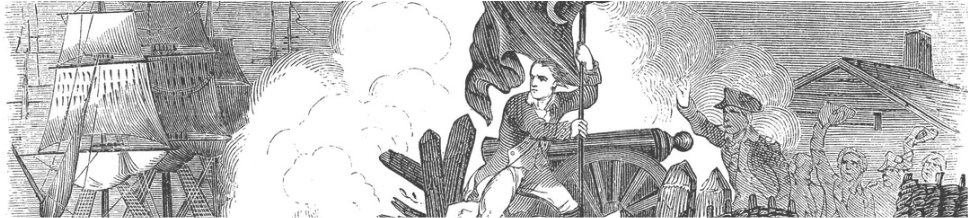
Right now, we are concentrating on the Revolutionary War in history and have recently studied Francis Marion– aka “the Swamp Fox.” If you are familiar with the warfare of the South during that time, you know that it was not the traditional “line up in a battlefield nicely and all agree to start marching and maiming each other at the same time” kind of warfare that had been popular up until that point. The Southern Theater did NOT have the manpower or resources that the British in the area had… so they got creative.

I think you might be able to guess how this game evolved from science to history.

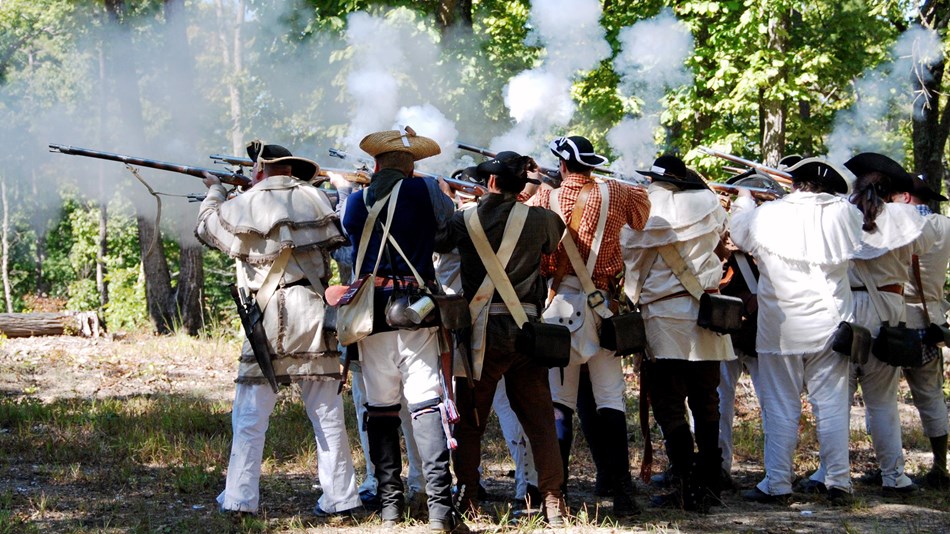
Yesterday, we went out into the yard… but the center player wasn’t an animal being stalked. It was the British in a swamp in the South, hoping not to be bombarded by the rumored Swamp Fox. The “stalkers” were now Continental militia… sneaking up for a surprise attack.
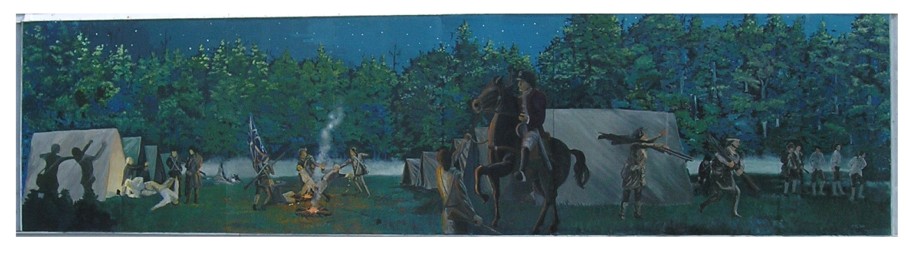
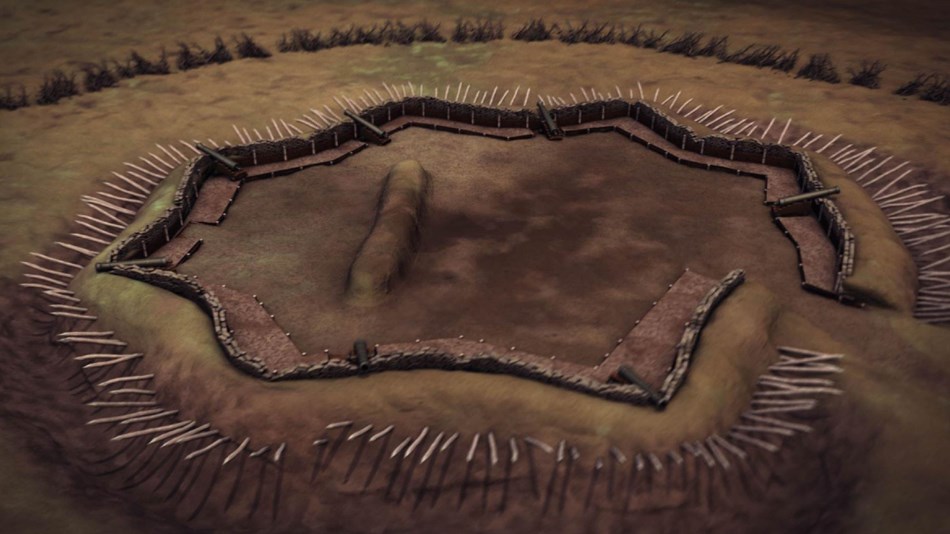
This picture is one of a series of murals done about Francis Marion. To read more, visit here.

The kiddos LOVED the variation… and it made incorporating enjoyment into the day easier to be able to tweak a game their already knew instead of finding a new activity to introduce and have them learn from scratch. (More time playing + less time explaining = more fun.)

(Bonus: the game can be played practically anywhere with no equipment. )

The second thing that I started doing a few weeks ago and did again this week was not be afraid to make my own videos to simplify our routine. We absorb a lot of literature and also believe in the benefit of committing things to our memories. In an ideal day, we’d be able to cover the memory work altogether with the original books… but that’s not the way things are sometimes. Instead, I make playlists on youtube and also in Amazon music that I can connect via bluteooth in the car or can pull up to play/review while waiting somewhere.

In making playlists, I’ve realized something. A pet peeve of mine is not being able to find brief recordings that make playlist making easy. I don’t want someone speaking for 10 minutes about a poem before getting to the recitation of it. And I also don’t want someone reading the poem in a flat voice, as I want my children to love the listening of it.

Recently, I’ve found some poems and info harder to find… so I’ve made them myself. These videos are completely amateur. No fancy movies or graphics. Just me, sometimes only me, reading. Sometimes, I’ve drawn little pictures to go along with my words. The key for me right now is for them to accomplish the purpose I have for them without taking a lot of time.

This is hard for me, friends.

Because when I want to do something, I want it to be my absolute best. I do.

And these videos that I make just aren’t.

BUT they serve the purpose, and they are a tool that I can actually use– versus waiting on all the time and energy it would take to do them “right.”

Maybe I’m beginning to see (and agree) with G.K. Chesterton more, the older I become: that “if a thing is worth doing, it is worth doing badly.”

Meanwhile, if you are looking for a short little poem for your young children to memorize and just need a simply reading of it, feel free to use this 30 second version of A Child’s Song.

It won’t win any production awards, but it might just help you get the “job done.” ๐Ÿ˜‰

easier than you think: soup from scratch

One of my goals this year in a part of living more simply is just to learn how to do the “convenience” foods easily with the foods that I already have on hand… instead of feeling like I need a bunch of ingredients to get dinner on the table.

A small way I’m doing that is by relying less on “staples” like canned soup, especially of the “creamed” variety.

If I have to be honest, we haven’t used a lot of a creamed of anything soups for a while, because of the additives and extras that I’m not a fan of. For instance, to make homemade cream of mushroom soup, you need 4 ingredients, up to six if you want actual cream in it and add salt.

Let’s look at the ingredients of what is in one of the most popular versions of mushroom soup. I copied and pasted directly from their website.

WATER, MUSHROOMS, VEGETABLE OIL (CORN, CANOLA AND/OR SOYBEAN), CREAM, MODIFIED CORNSTARCH, WHEAT FLOUR, SALT, MODIFIED MILK INGREDIENTS, SOY PROTEIN ISOLATE, MONOSODIUM GLUTAMATE, TOMATO PASTE, FLAVOUR, YEAST EXTRACT, DEHYDRATED GARLIC.

That’s a total of 14 ingredients, and that’s not counting any extra anything that sneaks in with vegetable oil, the modified milk ingredientS (plural means more than one, the last time I checked…), and also whatever is included in “flavour.”

(I’m not even going to go down the rabbit hole of what monosodium glutamate is… but it’s better known as MSG, if that helps get an idea. And some people really might be surprised to find soy in a cream of anything soup.)

So, what do you need to make your own creamed soup at home?

Easy: Butter. Flour.* Milk and/or cream. And then whatever other ingredient you want to be creamy. So, chicken for cream of chicken soup. Celery for cream of celery soup. Mushroom for mushroom.

(I’ll stop insulting your intelligence now. Ha!)

Oh, and salt and pepper, if you want to season the soup specifically vs. seasoning it with whatever you might be mixing it with.

Let’s chat steps. They are super easy.

First, melt your butter. For a medium thickness, you’ll start with 2 TBS.

If you are making a celery of mushroom soup, you’ll add it and soften it in the butter before adding salt and flour.

Once the butter is melted and your vegetables are softened…
Add the flour. For a medium thickness, you’ll add with 2 TBS.

Use a whisk to prevent lumps. Once it is incorporated…
Add 1 cup of liquid. Most of the time, it will be milk. In the case of cream of chicken, it should be half broth, half milk… and then add the cooked chicken.

Add salt as desired.

If you want the soup to be runnier or thicker, you’ll reduce or increase the amount of butter/flour at the beginning before adding the liquid. The flour and butter will be in equal amounts to each other.

How simple is that?

And can I say HOW MUCH BETTER it tastes? My 9 year old taste-tested and just asked me to make the soup for dinner all by itself.

Maybe next time, E… this batch is already claimed for a one-dish meal for dinner tonight. ๐Ÿ˜‰

* For people who are gluten free, you can totally sub a gluten free flour here, but you might have to modify the amount of liquid, as gluten free flours with coconut flour are more absorbent. And I’ve even used almond flour itself as a replacement, but the texture is more “gritty” vs smooth, and obviously the fat is higher than the regular flour counterpart. It is definitely a viable substitute for those want to a much lower carb or flour-free version of the soup, though.

embarrassment, empathy, endurance: why the show must go on… and why we should help it

Once, several years agoโ€”ย before marriage and babiesโ€”ย I found myself giving a 50 minute long one-woman show to an auditorium with over 500 people watching me. ย As if that wasnโ€™t adrenaline-inducing enough, I had just stepped on the edge of my floor length skirt and felt the clasp in the back pull and undo.

That was fun.

I remember, continuing my performance, and simultaneously pleading for the Good Lord, in His mercy and goodness to prevent my skirt from completing its malfunction in front of everyone. ย That I could just do myย โ€œjob,โ€ย without something very important falling down around me.

Itโ€™s an extreme AND completely real example. ย It’s one that I thought wouldnโ€™t apply to me again very much at all in my life. ย But, man, was I wrong.

Here we all are, arenโ€™t we? ย Just trying to do ourย โ€œjobsโ€โ€”ย trying to live and maybe tell our stories. ย We donโ€™t want any extra drama. ย We donโ€™t want anything more to think about because the job, though hopefully enjoyable , is still daunting enough. ย But then… we feel something begin to give way that shouldnโ€™t. ย We suddenly shift into worry and doubt and fervent prayer because we know, that just a little bit moreโ€ฆย just another inchโ€ฆย just one more slight shiftโ€ฆย and we will be vulnerable in ways we never, ever want to be.

IF my skirt had actually fallen down that dayโ€ฆย if that whole auditorium had seen me, standing there, exposed in my undergarments and embarrassmentโ€ฆย honestly, what would have happened? ย Okay, so I would have been completely mortified and would have wanted to claw up the floorboards of that stage in order to disappearโ€ฆย but besides that? ย What would have happened?

I wouldnโ€™t have died, no matter how much I would have wanted to.  I would have swallowed hard, and pulled my skirt up, made some comment to attempt to save face, and feel my cheeks grow hot.  My throat might have almost closed from choking down the emotion of it allโ€ฆ and I might have even had to excuse myself before going back out and continuing where I left off.

Thatโ€™s what would have happened.  Because I needed to finish my job.  Finish what I started.  Tell the story that placed me on that stage in the first place.

I think, whether or not you have been on stage at all, you know exactly what it is like to be in the scenario I found myself.ย ย Life has taught you to be afraid that something horrible is going to derail what you are doingโ€” and what you are doing is plenty enough already, thankyouverymuch. ย We are afraid to be left exposed and scrambling. ย We are petrified of our jobs being harder, our lives more complicated. ย We are scared of contingency plans and crisis modes and being distracted from what was **so carefully** planned, practiced, and rehearsed. ย And maybe, just maybe, we are worried about what people would say and think as they witness it all fall.

Hardship is so, well, hard to even think about.  Thereโ€™s a reason why those thoughts instantly drive us to worryโ€” and hopefully and much betterโ€” prayer. The grand irony of it all is that we are just as much audience as performer.  We watch others live all around us, and donโ€™t think for one second that they are worried about their own wardrobes exposing them, or tripping on stage, or forgetting their lines.  That they are just as afraid and vulnerable to messing up themselves.  They seem to have it all together as they go along, while we feel like we just stumbling by.  Honestly, shouldnโ€™t we know better by now?

We know the truth. ย The fact that we are all actors should make us the most empathetic audience in the world. ย It is exactly because I know what it is like to imagine the worst case scenario (by almost being or ACTUALLY being in worst case scenarios) that I can lean into otherโ€™s experiences when their worst case scenario happens. ย Itโ€™s why we can join others in the uncomfortable, and not let our own awkwardness keep us from doing what is right. ย And what is right? Right is swallowing your own discomfort to make it easier for your friend or neighbor or fellow momma to pick up her skirt and her pride, swallow hard, and keep going when her world is falling apart.

Best of all, we donโ€™t have to say and think anything beyond admiration and supportโ€” in whatever capacity we can.  

Life itself is a stage, someone brilliant once said. ย 

We are all players. ย 

And in this global cast, faith, hope, and love is the obligation for all of us.

Random bits & pieces: free mulch and foraging

The weather is getting warmer, and the plants are making their way from the cups and little planters we started seeds in to our raised beds. Maybe Iโ€™m just getting old or maybe what excites me in my life has changedโ€” probably both ๐Ÿ˜‚โ€” but gracious, I delight in seeing seedlings grow. Just little green bursts of friendly potential.

Watching my kiddos take pride in the plants is just another added privilege to see.

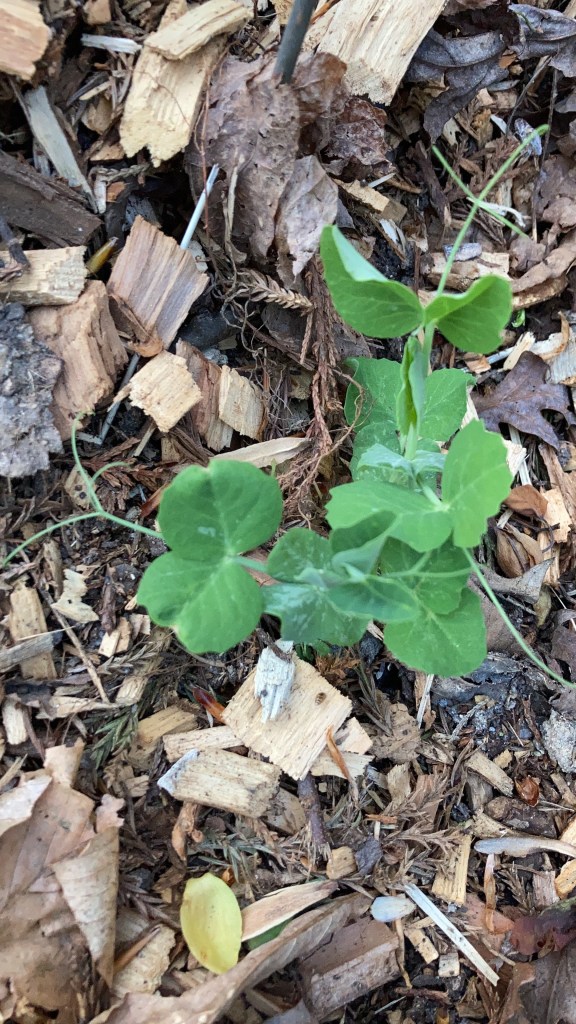
Behold, my buddyโ€™s pea plant. ๐Ÿ™‚

If you look at the picture above, youโ€™ll see some mulch around the peas from a pile that we received for free from a company called Chip Drop (https://getchipdrop.com/). We went to the website, filled out our info and a few days later, a truck was dumping a huge mulch mountain in our front yard! Weโ€™ve placed it on our flower beds and in our raised beds as filler and enrichment.

It was completely free and convenient, and will be doing it again in the future, Iโ€™m sure.

Another way, besides gardening, that Iโ€™m enriching my own knowledge and experience is learning how to use โ€œwildโ€ and useful plantsโ€” for food, comfort, and wellness.

See, I didnโ€™t grow up on a farm. I didnโ€™t grow up learning about plants or animals, how to observe nature not just for its beauty, awe, and intricatenessโ€ฆ but for how we can exist and be symbiotic with itโ€” how it provides for us in unexpected places, and how we, in turn, can provide for it, too.

Here is a plant I never, ever knew was edible, and it grows in our shady spaces so incredibly wellโ€ฆ hostas! Here was my first time, harvesting and cooking hosta from our yard! To my surprise, it cooks down and tastes very similarly to spinach. Iโ€™m researching other ways to use it in my cooking and mealsโ€ฆ but I was thrilled to start here!

My daughterโ€™s friend, P, was over while I was snipping the hostas and was still there as I finished cooking them and needed โ€œtaste-testers.โ€ Three out of four kids lined up, and they each loved them! Later that day, I got a text from Pโ€™s mom, asking me about my โ€œhosta recipe.โ€

And I laughed because not once ever in my life did I ever think I would have a hosta recipe, let along be asked for it.

Hereโ€™s to tasting food from our gardens and yards and learning about how to care for them well while learning how they can care for us.

If thatโ€™s not essential living, I donโ€™t know what is. ๐Ÿ’›

storytelling: ideas to help our students narrate well

If you have come across Charlotte Mason at all in your research about homeschooling– or if you would describe your own homelearning style as Mason-leaning– the term “narration” is probably one you are familiar with.

There are a lot more articles and even books that go into a lot more detail about what narration is and why it is important, and I’m not going to re-invent the wheel here.

The point of this post isn’t to take the time to define what it IS, but to remember what it is NOT. Narration isn’t just a regurgitation of the facts or plot-line of the story. It isn’t just us getting to see what the student knows–or doesn’t. I mean, it CAN (and probably should) include both of those purposes. But that is not all it is.

The purpose of narration is an invitation– and invitation for the student to make the information, the story and the lessons and impacts of it… his or her own.

Because there are ALL types of learners, it stands to reason that there will be all types of storytellers and all kinds of ownership.

A danger that we can fall into when we ask our kids to narrate is to accept– and maybe even encourage, because of time, energy, etc– that we get the “easiest” version of narration from them: basically, a simple retelling. There is absolutely nothing wrong with a retelling… but sometimes, some learners own stories in different ways.

I have found that my oldest isn’t a fan of simply retelling– she wants to create something. She will use figurines, peg dolls, playdough, etc. to create scenes. She wants to put on little skits and give lines to her smaller siblings (bless their hearts, ha!). A simple re-telling? No thanks.

I think it is hard for us as parent-teachers to come up with narration ideas on the fly if our kiddos are being a bit… hesitant. Sometimes all our children need is a germ of an idea and the freedom to run with it.

So, I’ve made up some bookmarks to print out and place in your books and read-alouds. Your child can choose off of the list or you can have a fresh idea rotation, come narration time! Several of the ideas I tweaked from the following post by Simply Charlotte Mason, but I intermingled several ideas of my own that we have done over here. โค

Happy storytelling, friends! May we be encouraged by how the power of story and living tellings of them shape our students and ourselves!

build a long rope: how to memorize long passages

It is said that โ€œLearning is a treasure that will follow its owner everywhere.โ€ (It’s a Chinese proverb, I believe.)

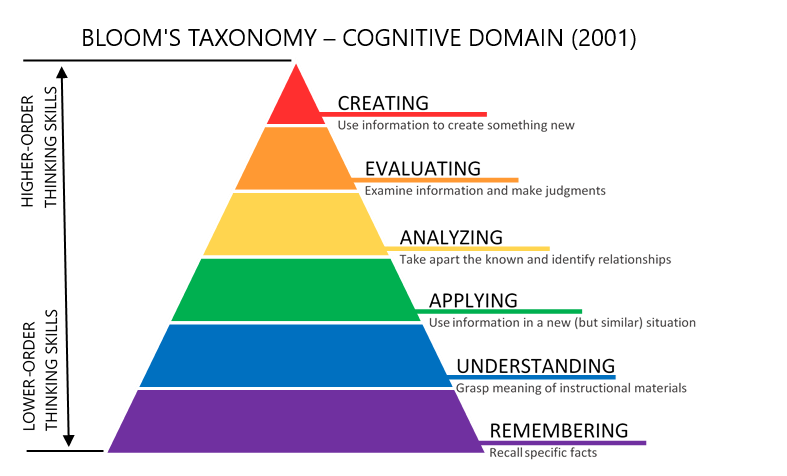
Regardless of whether or not you are a fan of memorization, no one can ignore the fact that we do have to remember something/be able to recall it to actually learn it, apply it, and create with it. That’s one of the main reasons memorizing takes its place as the base of Bloom’s Taxonomy. Being able to recall facts creates the ability for a student– for all of us– to be able to begin wrapping our minds around it, applying it to our lives and situation, analyzing connections, evaluating what we are learning… with the hopes that we can create something new out of it.

We can talk forever about how our current educational system might rely too much on remembering, or mistake remembering for education itself… and I actually have strong thoughts and feelings about that: as a teacher in a classroom for years myself (high school and college), I have definitely felt very frustrated about how pre-assessing and assessing and post-assessing whether or not students learned content was basically just memory-based– when learning is so. much. more!

But that’s not the point of this post. ๐Ÿ˜€

The point is: we DO need memory. Memory is the foundation for us not just to remember things, but to work and play with information and thought and art in our own heads: to “follow us” by simply being with us. Within us.

I have memorized A LOT in my educational journey. Not just for tests and quizzes, but for performance. Part of my undergrad and graduate degree requirements were me, myself, and I creating and performing 50 minute to 1hr and 10 minute one-woman shows. That’s a LOT of memorization.

But the memorization was just the first step. It was the first way for me to get that text in my head… to trickle down into my heart. I can’t tell you how many times I would be rehearsing the memory in my head, and suddenly I would get light-bulb moments about what the text really meant and how I could perform it. Suddenly, I would understand the characters in the story or the lines in the poetry I didn’t– and wouldn’t– without having it secure in my mind first.

Memorizing passage– classical and religious– is something we do in our home because I believe in the value of having thoughts, not just words, shape the hearts and the minds of my children.

So, how do you do it? How do you learn long passages? And to take it one more step… how can you get your students to do it as you use it in your home and homelearning?

In this very “amateur” video (because I don’t have equipment and a fancy home studio or anything. Instead, you get to join me at my kitchen table with a chalkboard in the background, ha!), I go through what I have done, what you can do, and how you can adapt the long-passage memory technique for little people and slip it into your morning time easily.

When you watch the video, you’ll completely understand what I mean by building “a long rope,” and how easy it is to actually do it!

Companion planting… with a twist

In our Gathering Wellness group* for the month of March, we have been concentrating on how to start a garden, seed prep, planting, and plant care for the season ahead. (Gardening is one of the best ways to practice reliance and cut the gardening budget while learning life skills… so a win/win/win!) Yesterday, we chatted a bit about companion plants: how some plants are great friends… and others aren’t.

A hack that my husband and I have used before in a small capacity and really plan to use a lot more of this year is the idea of companion SPRAYS… not just plants.

We’ve used essential oil sprays on our plants before, mainly for luscious green in our home and for pest-aways on our plants (Brian has such a cool story about cedarwood and roses!)… but I’m really wanting to step it up a notch this growing season.

What’s the idea behind companion sprays?

Well, essential oils are made from plants (I feel like I should say “duh” here, ha!)… so consider using oils in place of your companion plants. Companion sprays might work especially well with smaller plots of land or are doing container gardening!

Let’s look at an example. Say you want some luscious green beans this summer, but need to plant other veggies instead of transplanting a lavender bush beside your beans. (Don’t get me wrong, though… lavender is so great to have on hand, but that’s another post!) So, grab your Lavender essential oil instead, and let it do the work for you while you save soil space.

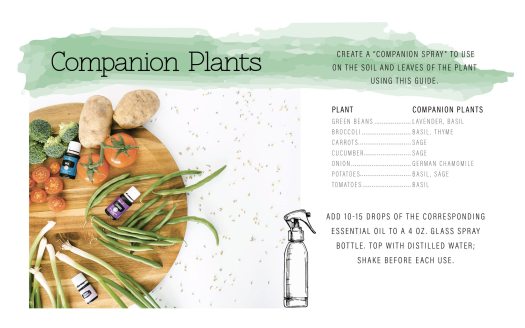
Here’s a guide to creating Companion sprays to use on the soil and leaves of the plant: Add 10-15 drops of the corresponding essential oil to a 4 oz. glass spray bottle. Top with distilled water; shake before each use. So easy!

PLANT …………… COMPANION PLANTS

Green Beansโ€ฆ.โ€ฆ Lavender, Basil

Broccoliโ€ฆโ€ฆโ€ฆโ€ฆโ€ฆ. Basil, Thyme

Carrotsโ€ฆโ€ฆโ€ฆโ€ฆโ€ฆ… Sage

Cucumberโ€ฆโ€ฆโ€ฆโ€ฆ. Sage

Onionโ€ฆโ€ฆโ€ฆโ€ฆโ€ฆ..โ€ฆ. German Chamomile

Potatoesโ€ฆโ€ฆโ€ฆโ€ฆ.โ€ฆ Basil, Sage

Tomatoesโ€ฆโ€ฆโ€ฆโ€ฆ.. Basil


I think we are going to try a Basil spray first, since it seems to be friends with lots of types of plants!

I’ll keep you posted as the season goes on!

If you want to check out a whole little e-zine on some of the other information about how oils can be used to encourage growth and troubleshoot problems in your garden, click the button below to read more. ๐Ÿ™‚

  • Gathering Wellness is an interactive FB community where we learn about lifeskills, homemaking, and wellness together. To join us, just click here!

The Revolutionary War… “close to home” (with a free homeschool resource)

As term 2 of our school year comes to a close, I get the exciting privilege of planning our end-of-year home learning trip!

Our history with A Gentle Feast centered around the Revolutionary War this year. Initially, I had grand plans of driving up through VA and up into the Philly areas, hitting several of the things and areas that we had learned about: Mt. Vernon, Monticello, the Liberty Bell, Independence Hall, the Betsy Ross museum… even up and over to Valley Forge. My brain was in high gear, planning all the things!

But then something else happened to hit a high, too.

Hello there, gasoline… I’m looking at you. :/

Between the high fuel prices and planning a long road trip to Texas later in the summer for a family wedding/reunion, it looks like we will be postponing that long trip for the next time we hit this history rotation. (My younger kids will be able to appreciate it more at that point anyway. Three is a little young to appreciate being in the same room that the Declaration was signed in, I think. Ha!)

Fortunately, my family lives in a state that was one of the original 13 colonies… so I started to really dig into the Revolutionary war close to home. I knew of a couple of battle fields quasi-close by, and knew that Nathanael Greene and the Swamp Fox had been up and around our state… but for living in this state all of my life (and going to state schools growing up), I was incredibly surprised about ALL of the Revolutionary history here in SC. (Truth be told, my memories in school of war and our state all seemed to be about the Civil War and fighting against our country vs. being a major contributor to its creation, but that’s another thought for another time.)

So now, my brain is back into high gear, plotting at least 5 battlefields and museums within an hour of our house… and planning an overnight closer to the coast.

I’m a huge fan of journaling and recording thoughts, questions, etc., as they come up… and find that my 3rd grader still needs a few prompts to help her write out her observations. I went ahead and designed some pages for our days out and about for her to use to help document what she learns along the way.

For fellow South Carolina homeschool/homelearning families, I’d love to have you use the pages I created to document your own trek of learning across our state. Just download and use the pdf below!

I’m going to share a few super helpful links below if you are interested in plotting your own weekend field trips! (Click the images for more information.) The Southern Campaign Animated Map is great for a general overview/review… but the other links below are geared towards an Piedmont/Upstate focus of the state’s involvement. I’m hoping to do a part 2 of it with more of a midland and coastal focus, if/when we get around to doing that soon.


Piedmont/Upstate Areas of Interest

Ninety Six National Historic Site
South Carolina Museum of Revolutionary War History
Battle of Musgrove Hill State Historic Site
Kings Mountain National Military Park
Cowpens National Battlefield

the right instructions.

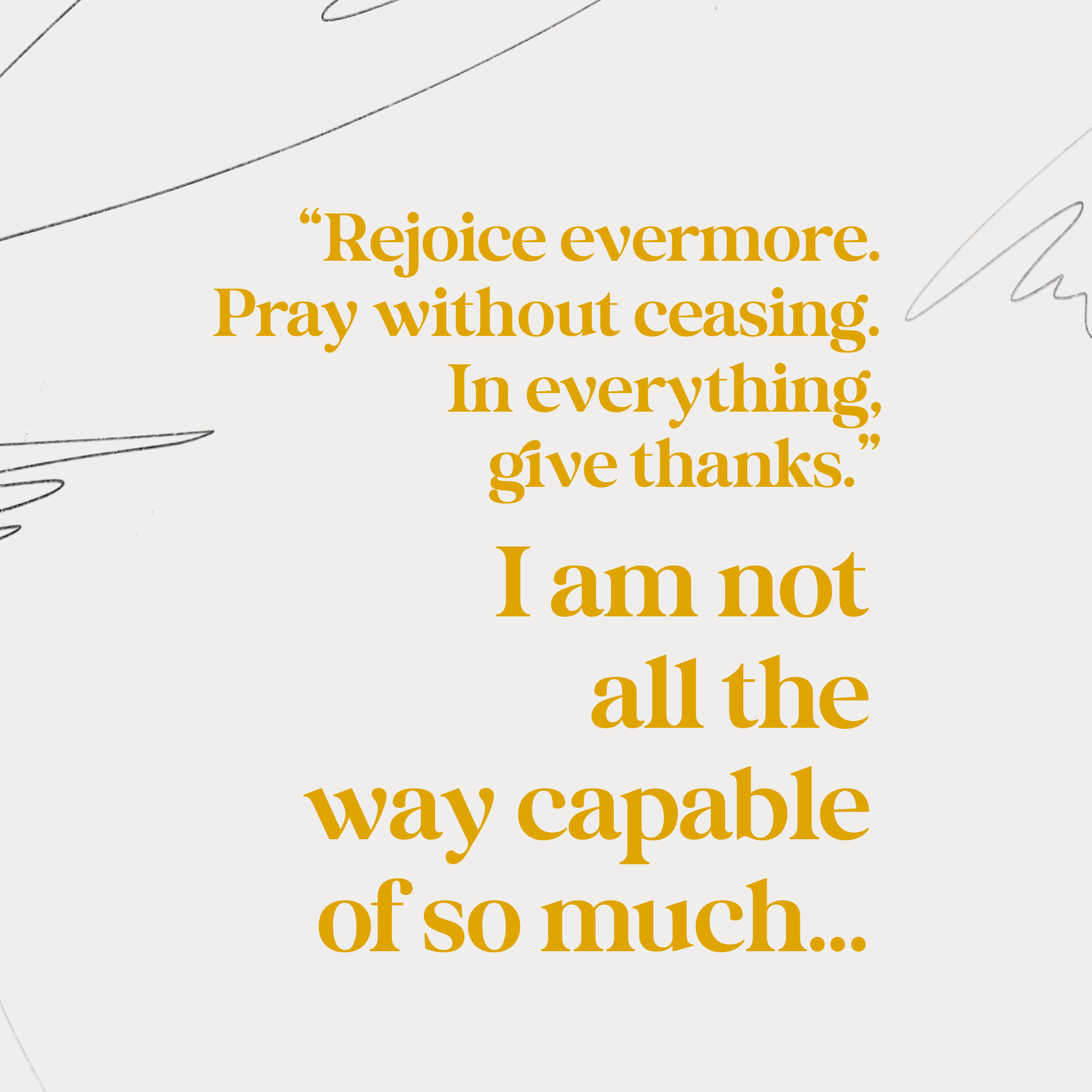
Wendell Berry once said, “You mustn’t wish for another life. You mustn’t want to be somebody else. What you must do is this: ‘Rejoice evermore. Pray without ceasing. In everything give thanks.’ I am not all the way capable of so much. But those are the right instructions.”

I don’t know about you, but there are some days that I just love where Iโ€™m at and what Iโ€™m doing. The moments seem light and joyful, and I feel perfectly placed in my life.

And there are days I donโ€™t.

I can blame it on a lot of things: the news. My lists. The worries on my shoulders. Grief. Extra fighting from the kids. Exchanged sarcasm. The toddler climbing into bed because a storm ignited her fearsโ€ฆ making us all restless. And squished. And sleep deprived.

But the fact of the matter is: the biggest hinderance to my own happiness is my disconnect to the command to give thanks.

You know the verse, โ€œI can do all things through Christ who gives me strength.โ€ We just like to slap those words on anything tricky that we need some extra diligence forโ€ฆ but what, specifically, is it referring to? Paul is referring to being contentโ€” in every circumstance. He says that he has learned to do it, no matter what. How? He can do it โ€œthrough Christ,โ€ who gave him strength *to give this thanks.*

What do you need to give thanks for? What gives your heart pause, just thinking about hoisting it to heaven with gratitude on your lips? I can think of a few things that I feel are just too hard, too sad, too hurtful for me to be thankful forโ€ฆ but fortunately, we donโ€™t have to do it alone. We have a Helper to lift our offering high, and intercede with perfect words we have an impossible time finding.

Christ.

He will give us strength.

Strength enough to offer gratitudeโ€ฆ

and in the doing, we are placed in the perfect position to receive His grace.

And isnโ€™t that something we can be oh so thankful for? ๐Ÿ’›

embracing grace in the grind.

For those of you who grow weary in well-doing sometimes– or easily get overwhelmed with the task of doing tasks without seeing the list grow smaller… this is a reminder:

It’s okay to let things go sometimes.

If there are certain things that you can’t *stand* being messy– as in, it wears on your mental or physical well-being– then by all means, keep doing those things. But others? It might just be okay to give themโ€ฆ space.

This quotation by Emily P. Freeman is talking about spiritual practices, but I’m going to apply it to the here and nowโ€ฆ

“Itโ€™s not about what items on a [cleaning] checklist that we need to check off. In fact, if a [task] is causing you to experience shame, anxiety, tension, or overwhelm, Iโ€™d say thatโ€™s a practice you donโ€™t need to be doing right now. It doesnโ€™t mean the practice itself is bad or that youโ€™ll never engage with it again, but anxiety in a practice is your body trying to tell you something. It could be an arrow to a wound. It may also be, and often is evidence of a season of growth or change, even though it probably doesnโ€™t feel that way, but that could be what it isโ€ฆ

There is a true narrative and that is the stunning and relentless love God has for you. If a practice runs counter to that narrative, take a pause, take a break, take a breath and find a practice that reminds you of the love of God instead.”

For me, this means I can’t ignore my kitchen forever (nor do I want to)… but it does mean that it is better for me to ignore it until my soul is restored and I can clean it in a healthier space, instead of one of shame (“if you don’t clean this right away, you are lazy”) or anxiety (“I don’t want it to be a mess in case someone stops by”) or overwhelm (when I look around and let simple kitchen clutter upset me in ways that it shouldn’t). THAT is a sign: if the kitchen overwhelms me, that is because I am already overwhelmed, and I need to sit and deal with that before the dishes.

It’s hard for me to do… but I feel like it will lead to a much happier, healthier me, and actually give me the capacity to love my home better overall. โค๏ธ


If you are looking for a place to get ideas about how to love your home while still embracing grace in the grind, please head over to the FB group, Gathering Wellness. We choose a new topic each month to explore and right now we are in the middle of encouragement, conversations, etc., that are all about making our home a loving place for everyone to thrive in. ๐Ÿ™‚